Restaurant No-Shows in Singapore: What They Cost and What Stops Them
A no-show costs a restaurant three things at once: the table for the whole timing, the food you prepped, and the walk-in you turned away because that table was held. The things that reliably cut no-shows are boring: a reminder the guest actually sees, a booking that is easy to cancel, and a reason to turn up. Deposits work too, and they cost you bookings. Here is how to think about each one.
Make cancelling easy, not hard
This feels backwards and it is the single biggest lever. Most no-shows are not people being rude. They are people whose plans changed and who had no quick way to tell you, so they did nothing.
If cancelling takes one tap in a message they already have, a good share of your no-shows turn into cancellations with hours of notice, and that table goes back on sale. If cancelling means calling a restaurant that does not pick up during service, you get a no-show instead.
Every booking on Eventful Tables carries its own link with the cancel button on it, so the guest never has to phone you to let you go.
Send the reminder where they will see it
An email sent at the moment of booking is not a reminder. It is a receipt, and it is buried by the time the day comes around.
What works is a short message close to the booking, on something the guest actually opens. It should say the restaurant, the day, the time, the number of people, and carry the cancel link. Nothing else. Long confirmations get skimmed and the cancel link never gets found.
Every Eventful Tables booking gets a confirmation with its own link, and that link is where the guest changes or cancels without having to reach you.
Give them a reason to turn up
A booking with something attached to it is kept more often than a booking with nothing attached. That is the honest argument for a quiet-hour deal that is only unlocked at the table.
On Eventful Tables the guest's discount is not applied when they book. It is unlocked when they arrive and scan the restaurant's QR sticker. Turning up is the thing that pays them. Every arrival also earns them coins that come off a future bill, which is a second small reason to show up rather than drift.
It is not a deposit and it will not stop everyone. It changes the maths for the people who were on the fence.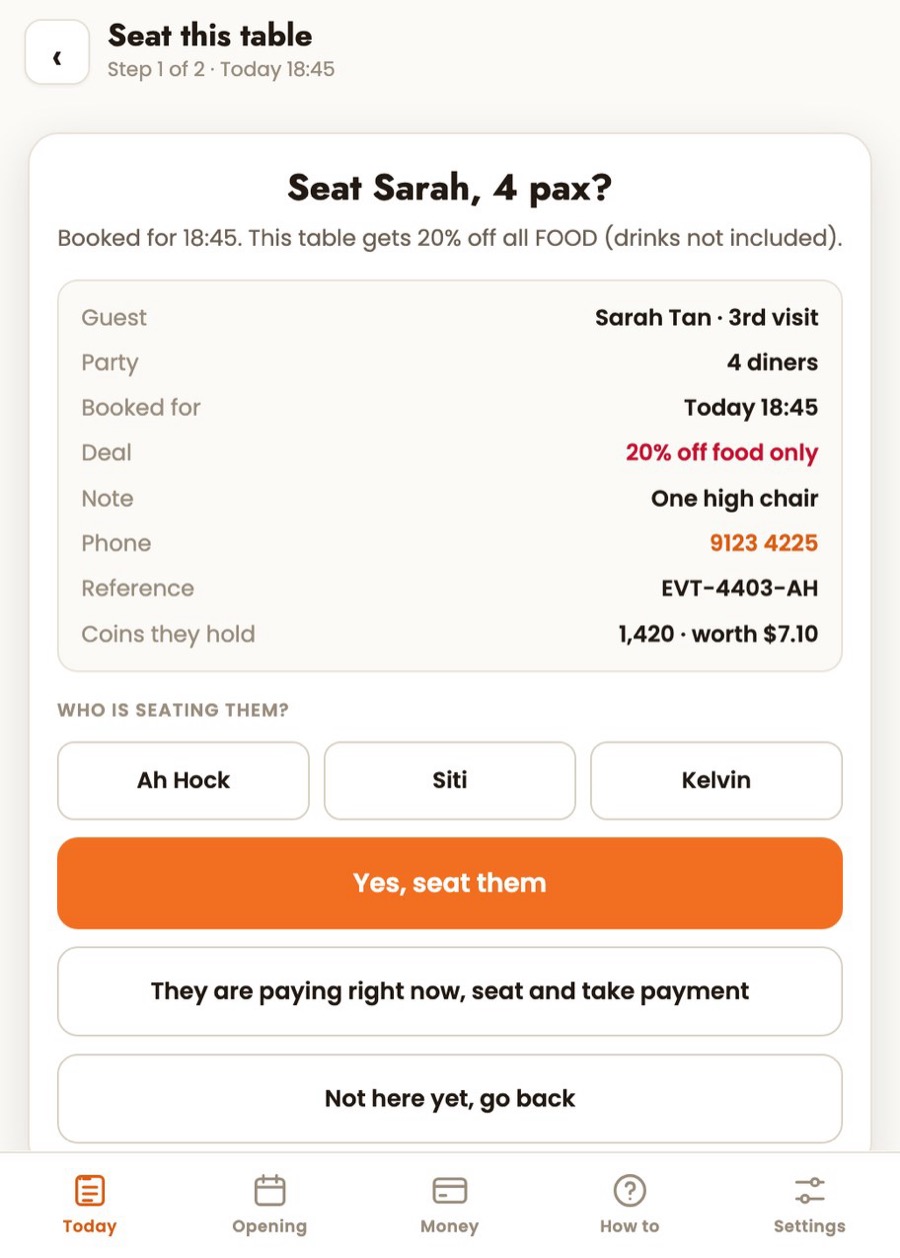
What a no-show should cost you
Nothing, from your booking platform at least.
Check how yours charges you. If you pay per cover booked rather than per cover seated, you are paying for empty chairs, and a bad week of no-shows costs you twice.
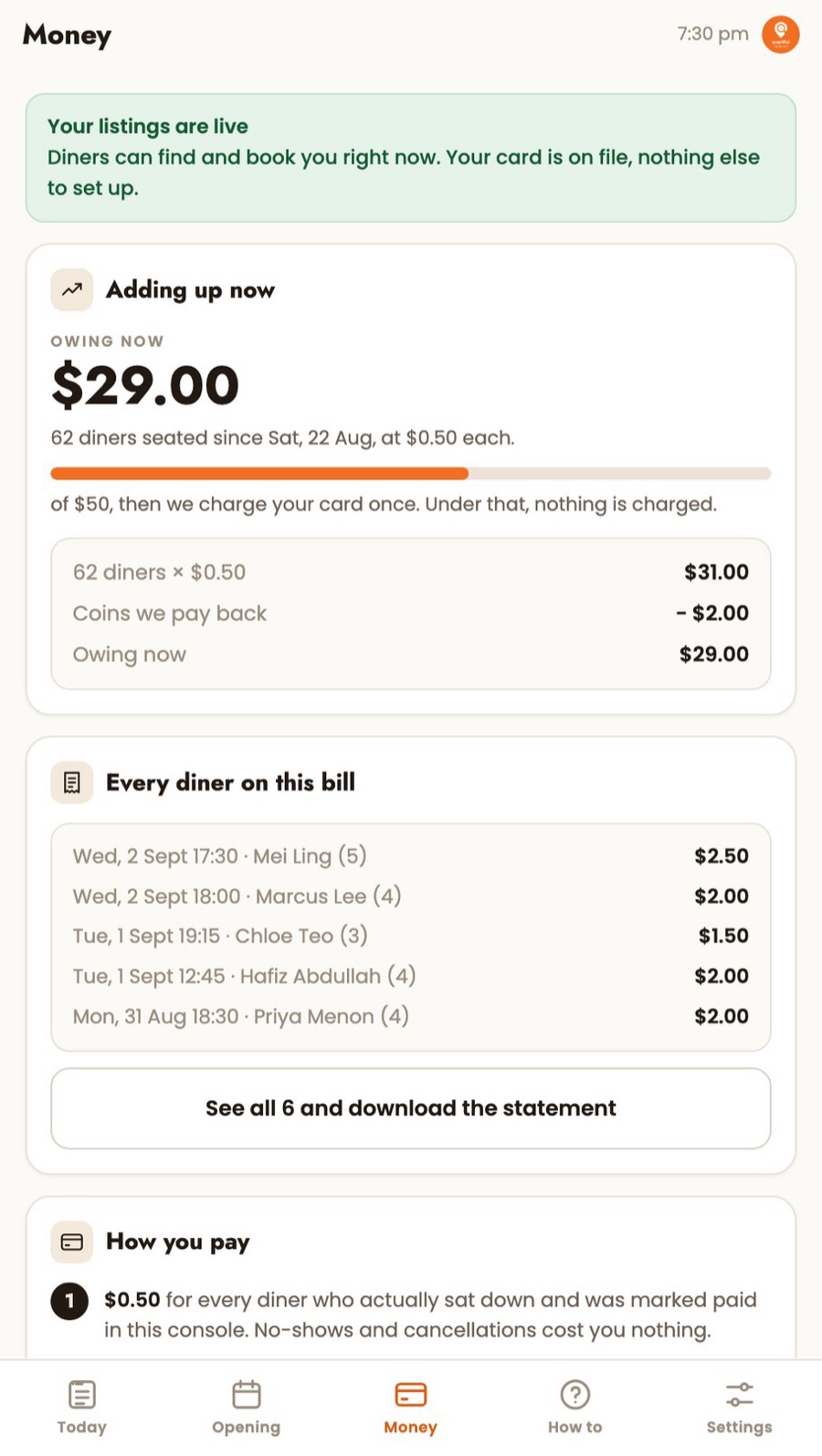
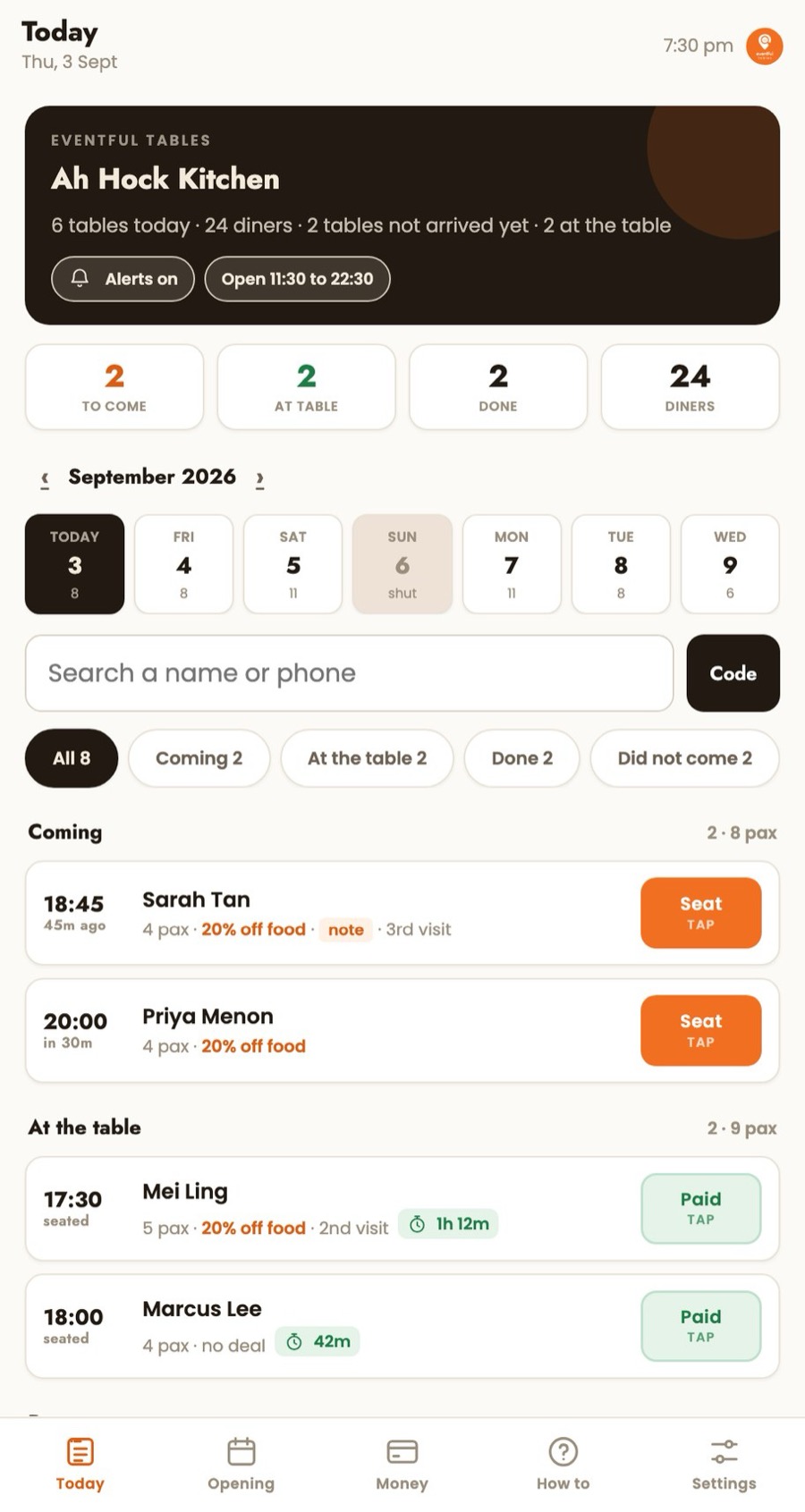
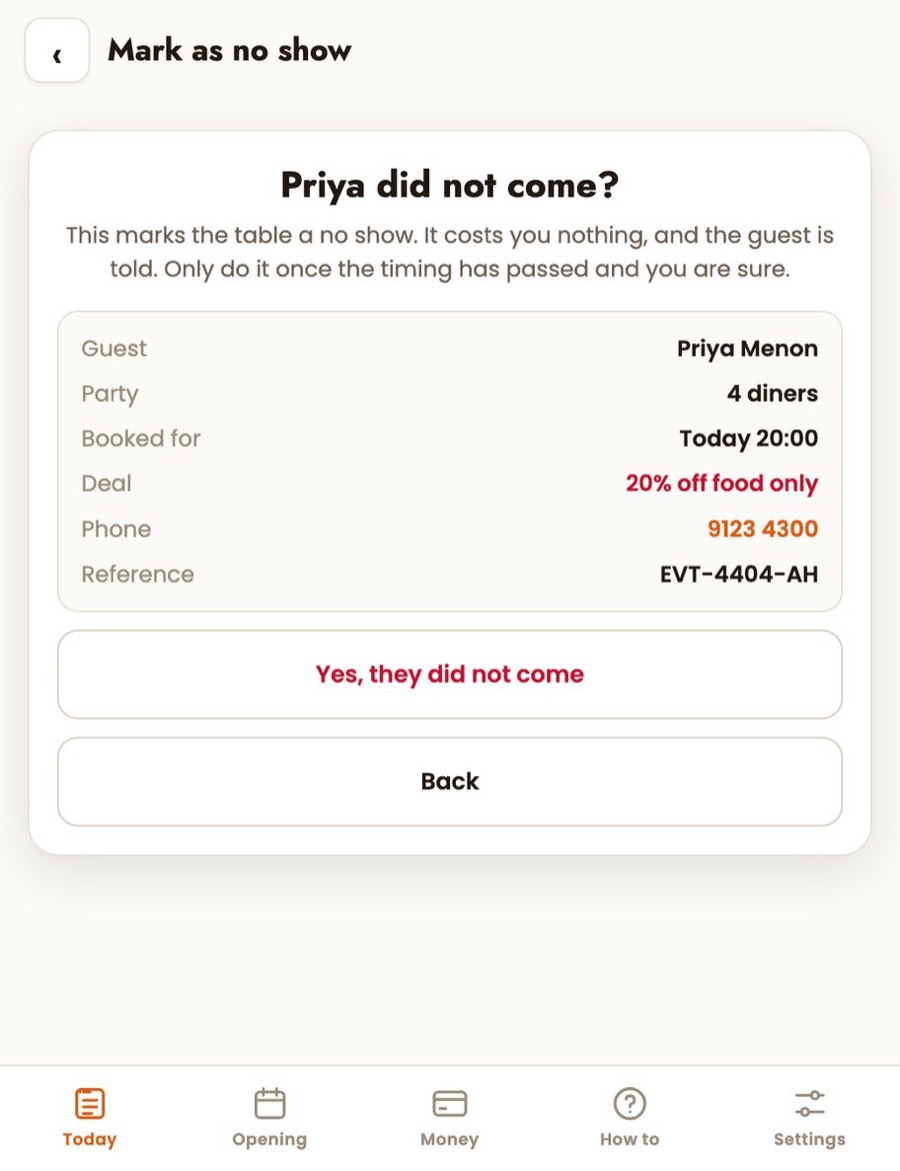
On Eventful Tables only diners who actually sit down are billed. A no-show is one tap in your console once the timing has passed, it is recorded against the guest, and it costs you nothing.
About deposits
Deposits do reduce no-shows. They also reduce bookings, and they turn every cancellation into an argument at a moment when your manager is busy.
They earn their keep in a specific place: large groups, set menus, tasting menus, festive periods, and anything where the food is bought for that table and cannot be sold to anyone else. A deposit on a two-person Tuesday lunch usually costs you more covers than it saves.
If you do take one, say the amount and the cancellation window in plain words at the point of booking, not in fine print, and refund fast when someone cancels in time. A slow refund costs you the guest permanently.
Good to know
· Count your no-shows for two weeks before changing anything. Most restaurants guess high and then over-correct.
· Put the cancel link in the reminder message, not only in the original confirmation.
· Ring large tables the day before. The bigger the party, the more worth a human call it is.
· Check whether your platform bills you per booking or per seated diner. That one line decides who pays for a no-show.
FAQs
How much does a restaurant no-show cost?
More than the missed bill. You lose the table for the whole timing, the food prepped for it, and any walk-in you turned away while holding it. The exact number depends on your spend per head and how long a timing runs, so work it out from your own covers rather than from a general figure.
What actually reduces restaurant no-shows?
Three things, in this order: making cancellation one tap so plans that change become cancellations instead of no-shows, sending a short reminder close to the booking on something the guest actually opens, and attaching something to the booking that the guest only gets by turning up.
Should a restaurant charge a deposit?
It works best for large groups, set and tasting menus and festive periods, where the food is bought for that table specifically. On ordinary small bookings a deposit usually costs more covers than it saves.
Do I pay for no-shows on Eventful Tables?
No. Only diners who sit down are billed. You mark the booking as a no show in your console once the timing has passed, and it costs you nothing.
How does Eventful Tables know a guest turned up?
The guest scans the restaurant's QR sticker when they arrive, and that scan unlocks their discount. Because the arrival is recorded on the guest's side, the restaurant cannot block it and the guest cannot deny it. Staff can scan too, and it is recorded separately.