How to Fill Quiet Hours in a Restaurant Without Cutting Every Price
The mistake is a discount that runs all day. It hands money back to the people who were coming at 7pm anyway, and it teaches your regulars to wait for the deal. The fix is to put the discount only on the hours your room is already half empty, cap how many discounted tables you take per timing, and leave your busy service at full price. That is a different tool from a sale, and it is the one that actually pays.
Find your dead stretch first
Before you decide anything, look at two weeks of covers by the hour. Most Singapore restaurants have the same two holes: the gap after lunch, roughly 2.30pm to 5pm, and the tail end of dinner after about 8.30pm.
Those hours are already costing you. The rent is paid, the lights are on, and your kitchen is staffed. A table at 3pm that pays 20 percent less is still better than the empty chair it replaced. A table at 7.30pm that pays 20 percent less is money you gave away.
So the rule is simple. Discount the hours you cannot fill. Never discount the hours you can.
Put a cap on it, per timing
The second mistake is an open-ended deal. If you say 20 percent off from 2.30pm and forty people take it, you have just run a sale.
Cap it. Decide how many discounted bookings you will accept in each timing, say eight, and once those are gone the timing is full. Everyone else pays full price. You have filled the room and you have protected the ceiling.
The cap also does something quieter that matters more: it makes the deal feel worth taking. A discount with six slots left moves people. A discount that is always available moves nobody.
Decide what the discount comes off
Off food only, or off the whole bill including drinks. That is a real decision, not a detail.
Drinks carry your best margin, so most restaurants put the deal on food only and keep the bar at full price. If your quiet stretch is the afternoon and you want to sell coffee and cake, the opposite might be right. Either way, decide it once and say it plainly on the listing, because a guest who finds out at the till that their beer was not included leaves angry.
Service charge and GST sit outside the discount. That is normal and everybody in Singapore expects it.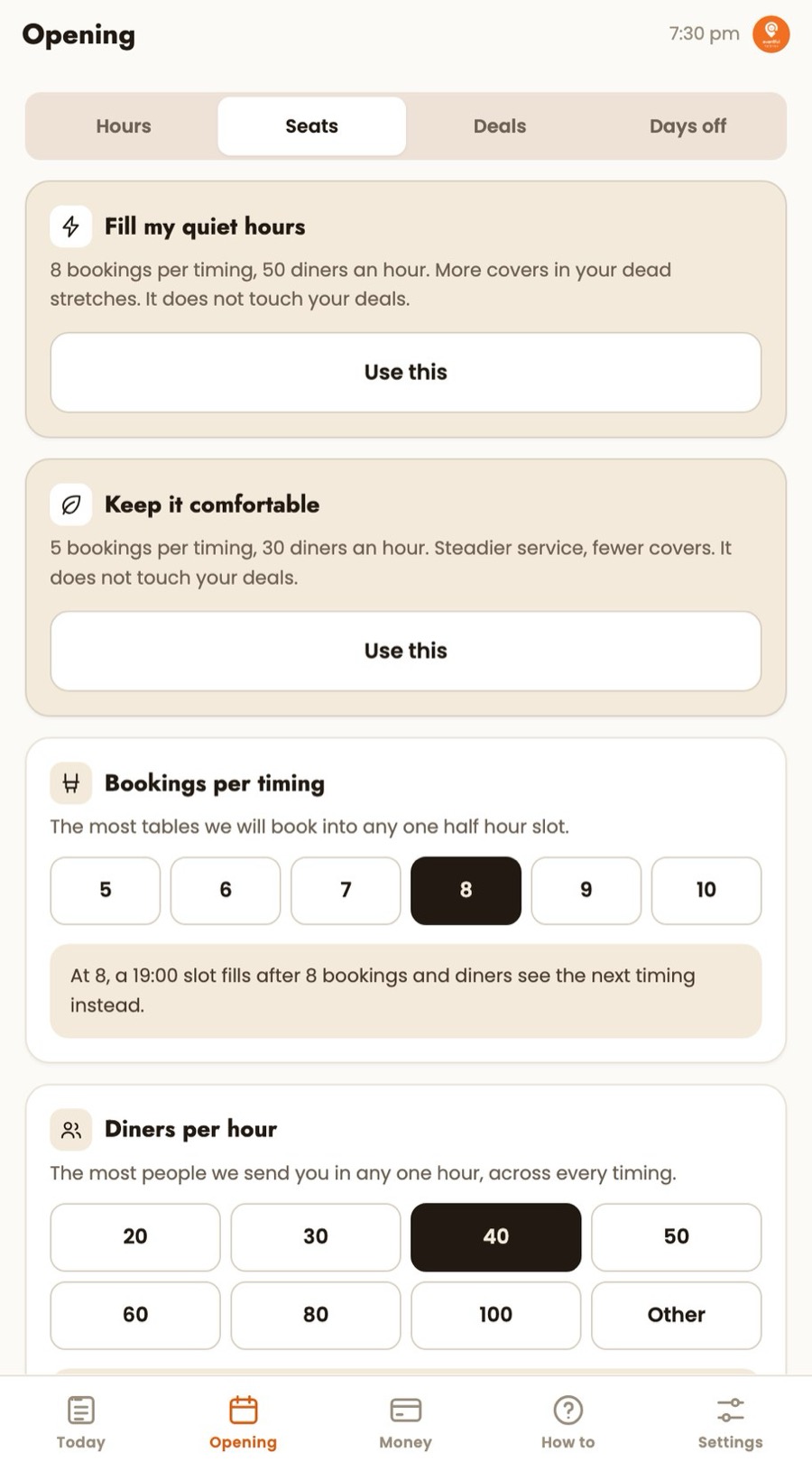
How this works on Eventful Tables
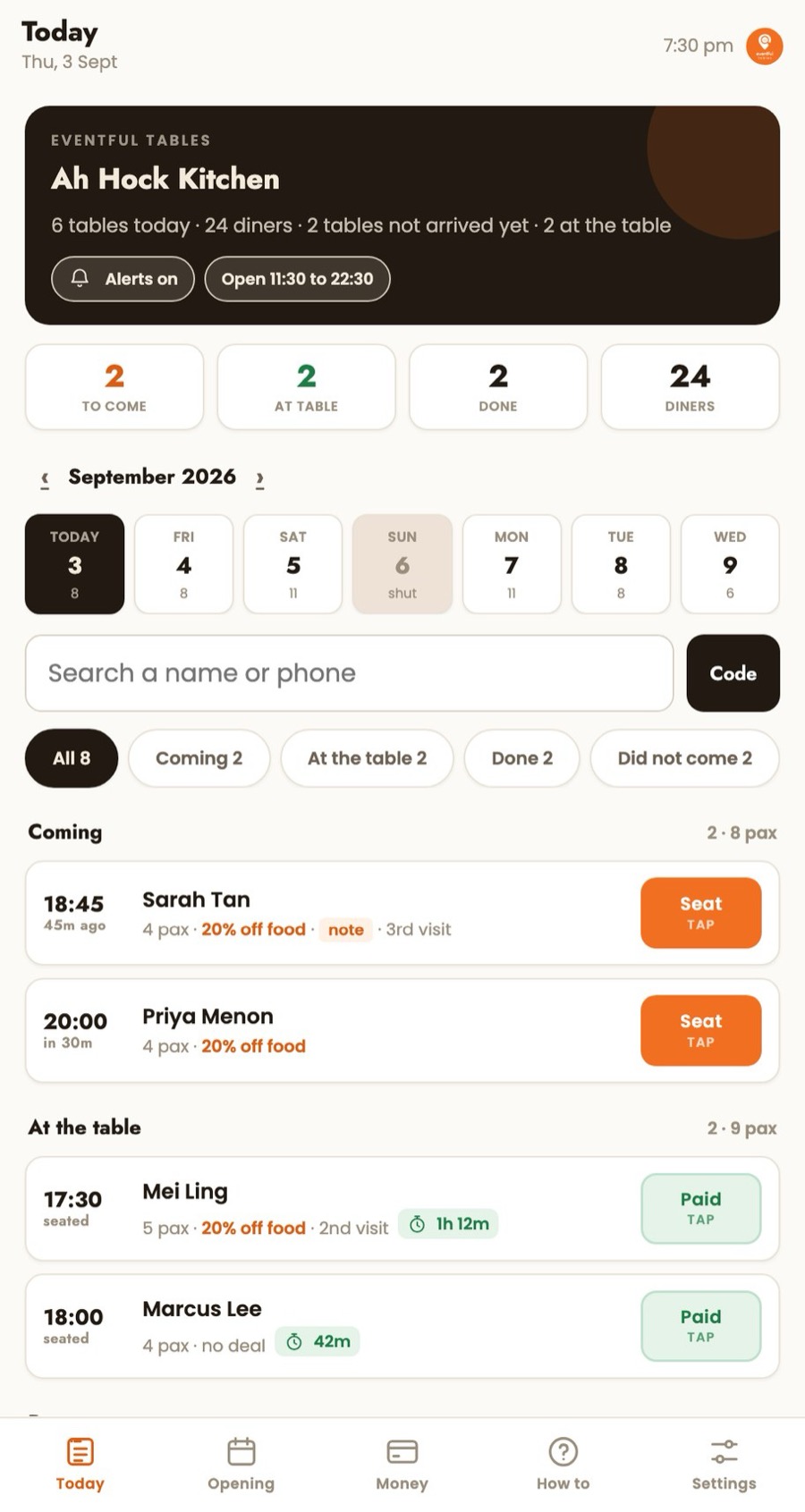
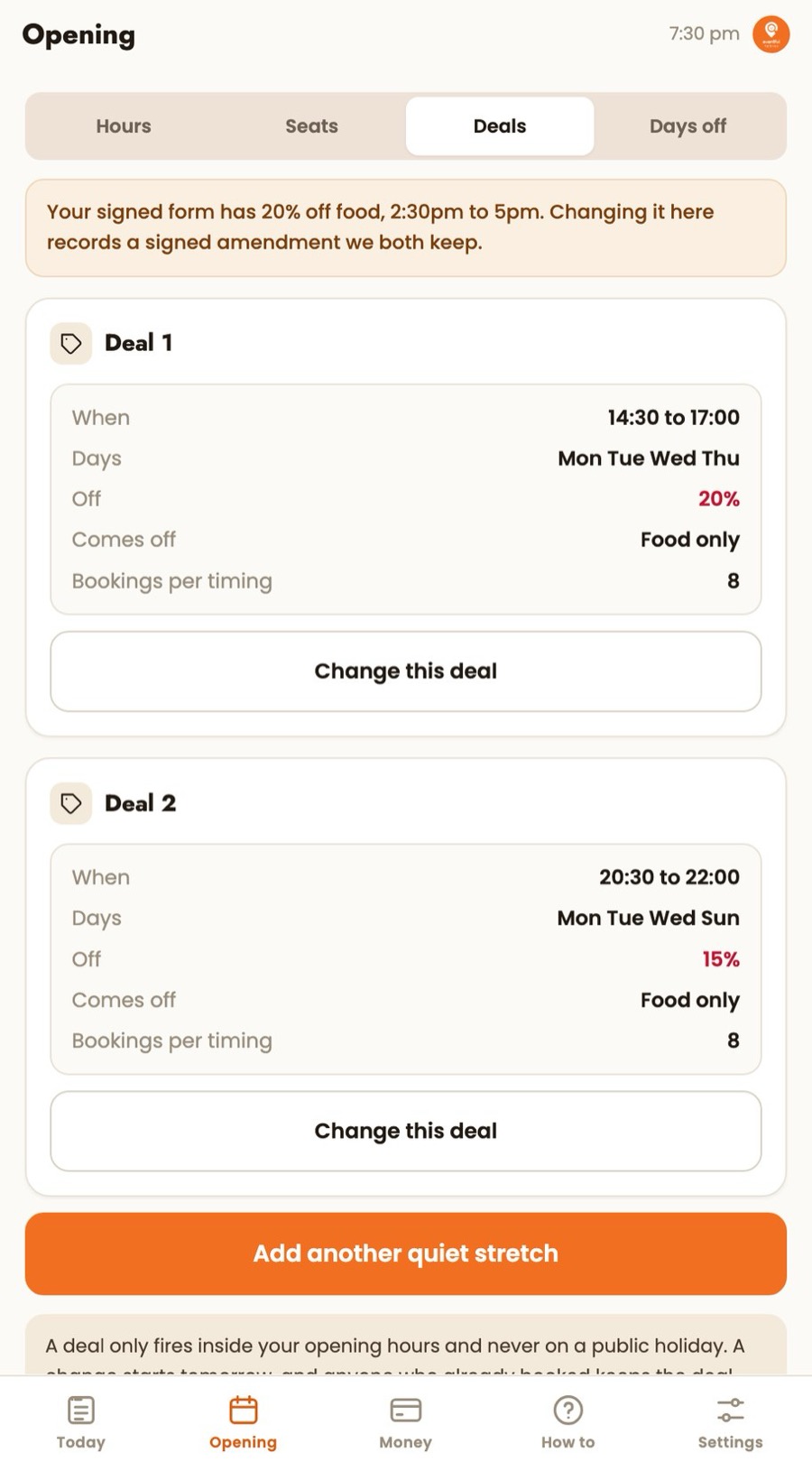
You set the stretch, the days, the percentage, whether it comes off food only or everything, and how many bookings you will take per timing. You change it yourself, and a change starts the next day so tonight's guests keep what they booked.
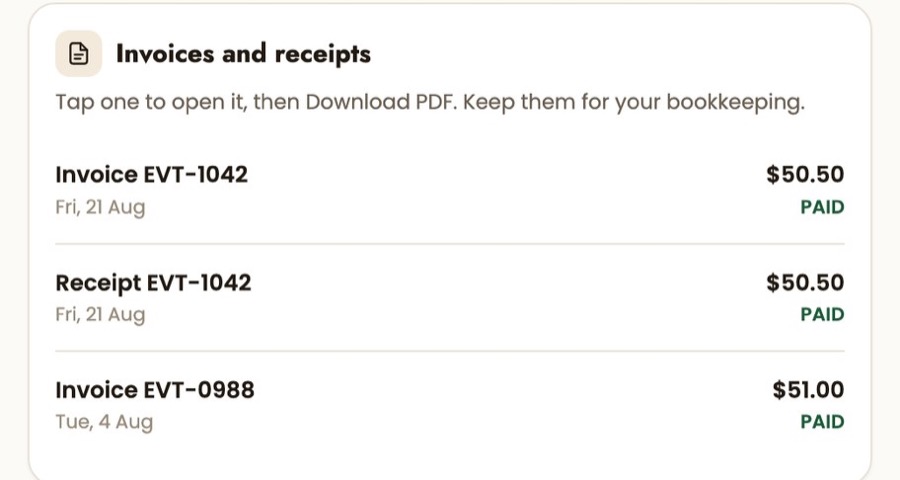
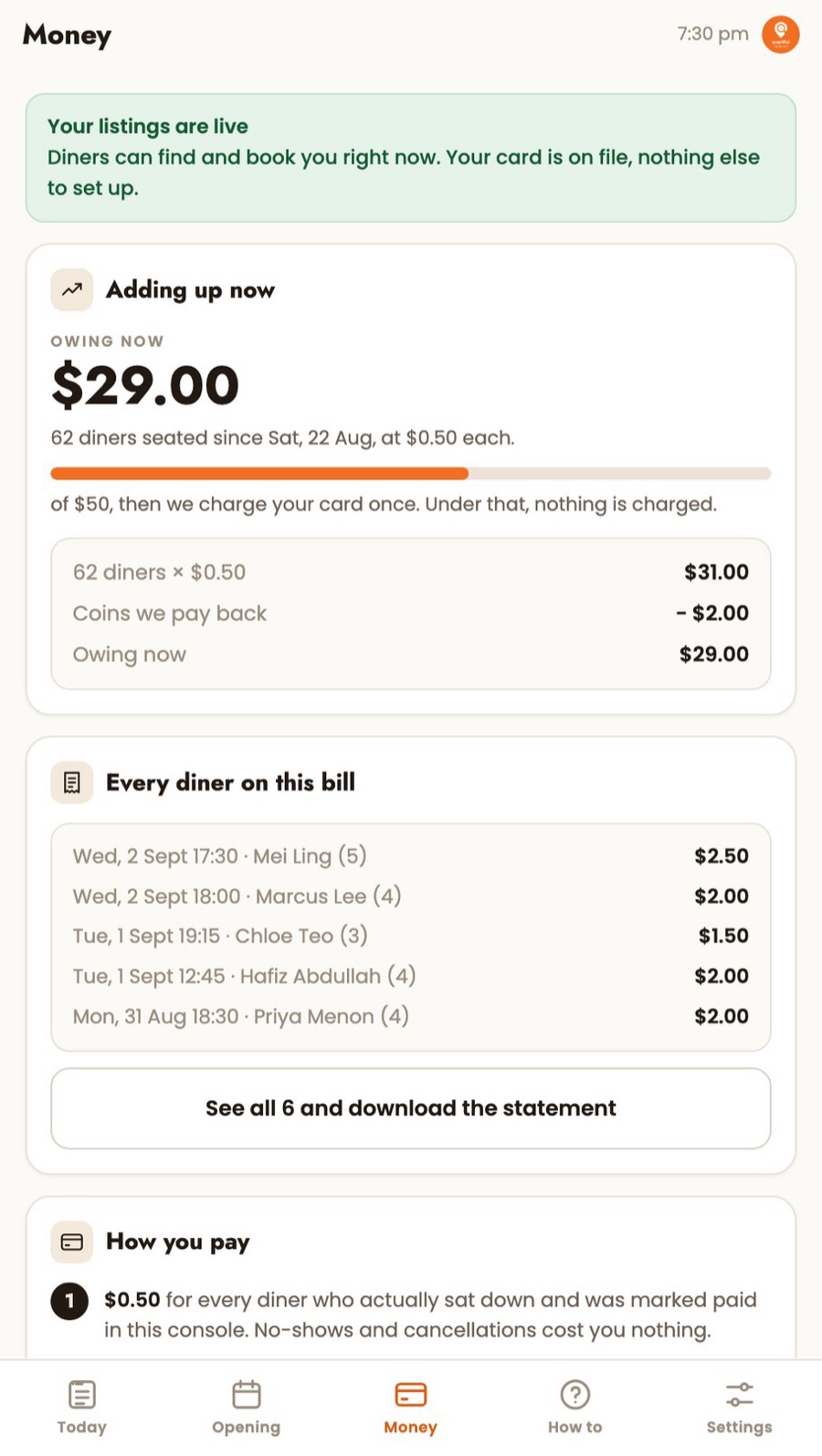
A deal only ever fires inside your own opening hours, and it never fires on a public holiday, so you do not have to remember to switch it off before a long weekend. You pay one dollar for each diner who sits down and nothing at all for the ones who do not.
Good to know
· Start at 15 or 20 percent, not 50. A half-price deal fills the room with people who will never come back at full price.
· Cap the bookings per timing. Without a cap you have not made a quiet-hour deal, you have made a sale.
· Keep Friday and Saturday dinner out of it entirely unless you genuinely cannot fill them.
· Watch what the discounted tables actually spend. If they order like your full-price tables, widen the deal. If they order the cheapest thing and leave, narrow it.
FAQs
What are quiet hours in a restaurant?
The stretches where your dining room is well below capacity while your rent and staff cost the same. In Singapore that is usually the gap after lunch, about 2.30pm to 5pm, and the last part of dinner after roughly 8.30pm.
Is discounting quiet hours bad for my brand?
It is far safer than an all-day discount. A deal fixed to hours you cannot fill reads as an off-peak price, the way a matinee ticket does. A deal that runs whenever you are open teaches your regulars to never pay full price again.
How big should an off-peak discount be?
Enough to move somebody's plans, not enough to change who your restaurant is for. Most start at 15 to 20 percent off food. If nobody books after two weeks, the problem is usually the timing you chose, not the size of the discount.
Should the discount include drinks?
Usually not. Drinks carry the best margin in most restaurants, so keeping the bar at full price protects the thing that pays for the deal. Whatever you decide, say it on the listing so nobody is surprised at the till.
How do I stop a quiet-hour deal from being used at my busiest time?
Fix the deal to the hours and days you choose, and cap how many discounted bookings each timing will accept. On Eventful Tables both of those are set by the restaurant, and a deal never runs outside your opening hours or on a public holiday.