5 Questions That Make a Conversation With Another Restaurant Owner Useful
Another restaurant’s success story can sound simple after the difficult parts have been edited out. A useful founder conversation asks about the choices behind the result, including what did not work. The aim is not to copy a business wholesale, but to learn which parts might fit a different operation.
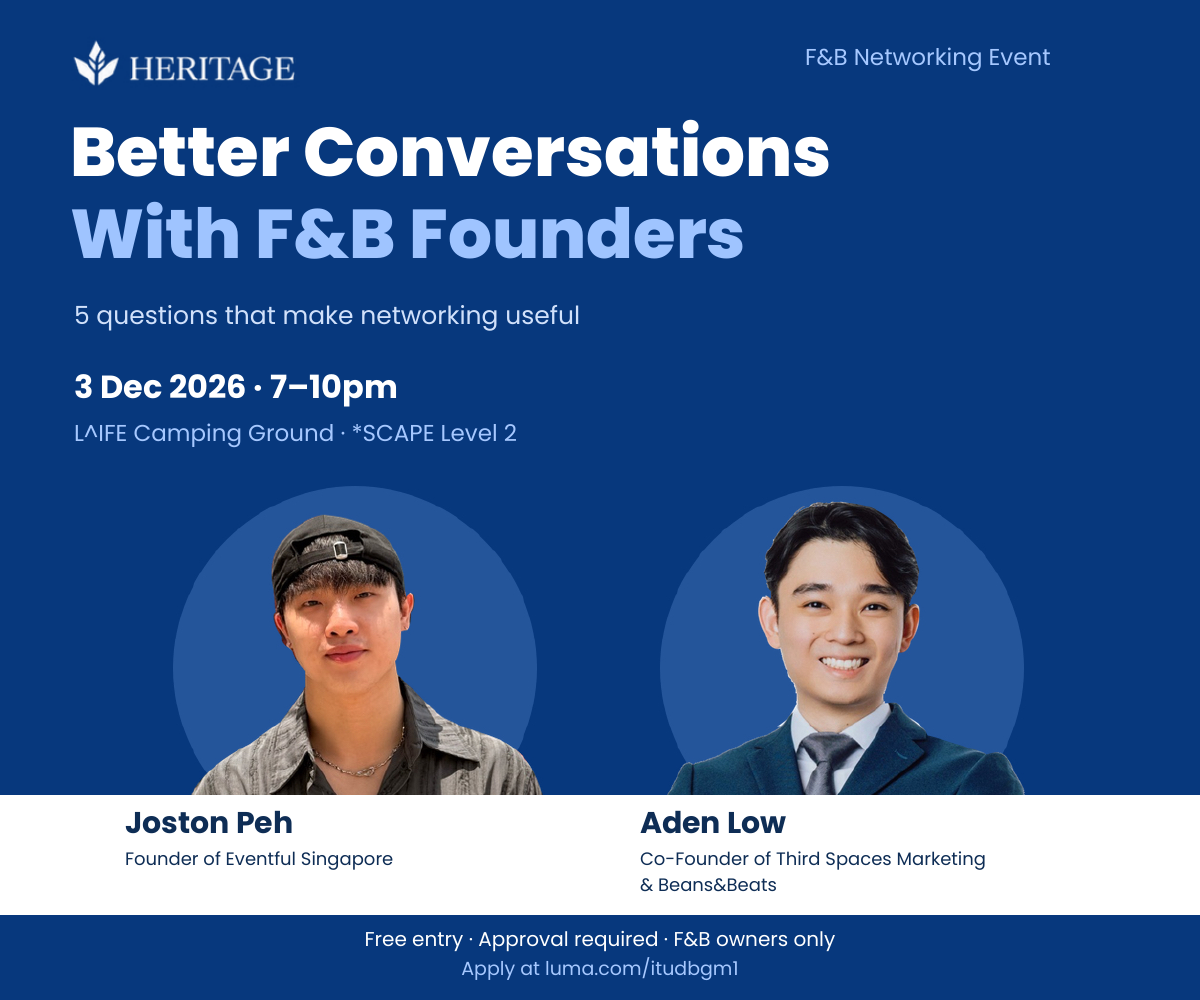
Photo: Heritage Singapore / Eventful Singapore
1. What problem was the business actually solving?
An owner may describe a successful content campaign when the original goal was filling a particular service period, introducing a new menu or helping customers find an outlet. Those are different problems. Understanding the starting point makes the result easier to interpret.
A useful follow-up asks what the team noticed before acting. Was the issue visible in bookings, customer questions or staff feedback? A clear observation is more transferable than the statement that a video went viral.
2. What constraint shaped the decision?
A small kitchen, limited filming time, a particular neighbourhood or a founder who dislikes appearing on camera can change the approach. Asking about constraints reveals why a decision made sense for that business.
The listener can compare those conditions with their own restaurant before borrowing the idea. A process that depends on a full-time production team may not fit a stall where one person handles ordering and service.
3. What happened after people showed interest?
Attention is only part of the story. The owner can ask how customers found the menu, made a booking or arrived at the outlet, and whether the operation was ready. The discussion is more useful when it separates online activity from actual service outcomes.
There is no need to demand confidential customer records or commercially sensitive figures. A description of the process and the measurement limits can be enough to identify an improvement worth exploring.
4. What would the owner do differently?
This question can reveal an approval bottleneck, confusing offer wording or a filming plan that disrupted service. It also makes space for an honest answer that is not a polished case study.
The listener should distinguish the speaker’s personal judgement from a general rule. One owner’s experience can suggest a hypothesis; it does not establish that every restaurant should change its pricing, format or posting frequency.
5. What is the smallest useful test?
A practical takeaway might be a clearer outlet label, a short staff interview or a revised menu link. Choosing a small test avoids turning an interesting conversation into an expensive commitment before the fit is understood.
The owner can record the idea, the reason it might help, who will try it and what would count as a useful result. Enterprise Singapore describes networks as a way to exchange ideas and build on partners’ knowledge; this checklist is an editorial way to make that exchange concrete, not a guaranteed networking outcome.
Related: meet other F&B owners
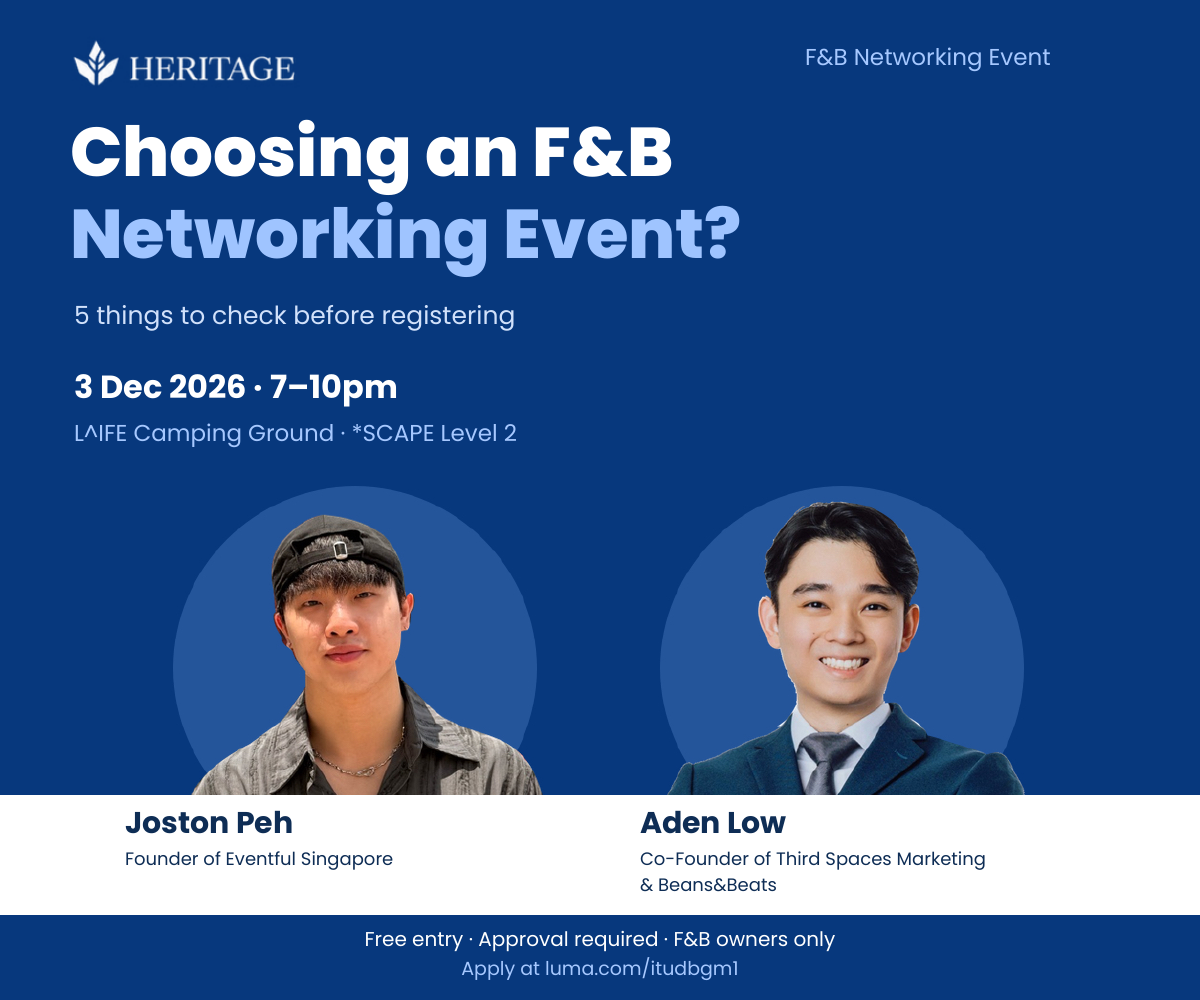
Heritage Singapore’s Your First 10K Followers networking evening takes place on 3 December 2026, 7–10pm, at L^IFE Camping Ground, Level 2, *SCAPE. The session features Joston Peh and Aden Low. It is free, strictly for F&B owners and requires approval. No food or drinks are provided. Check details and apply on Luma.