HERITAGE · F&B BUSINESS GUIDES
Aden Low’s F&B Content Figures: The Questions Behind a 500K-View Video
18 November 2026 · Updated 18 November 2026
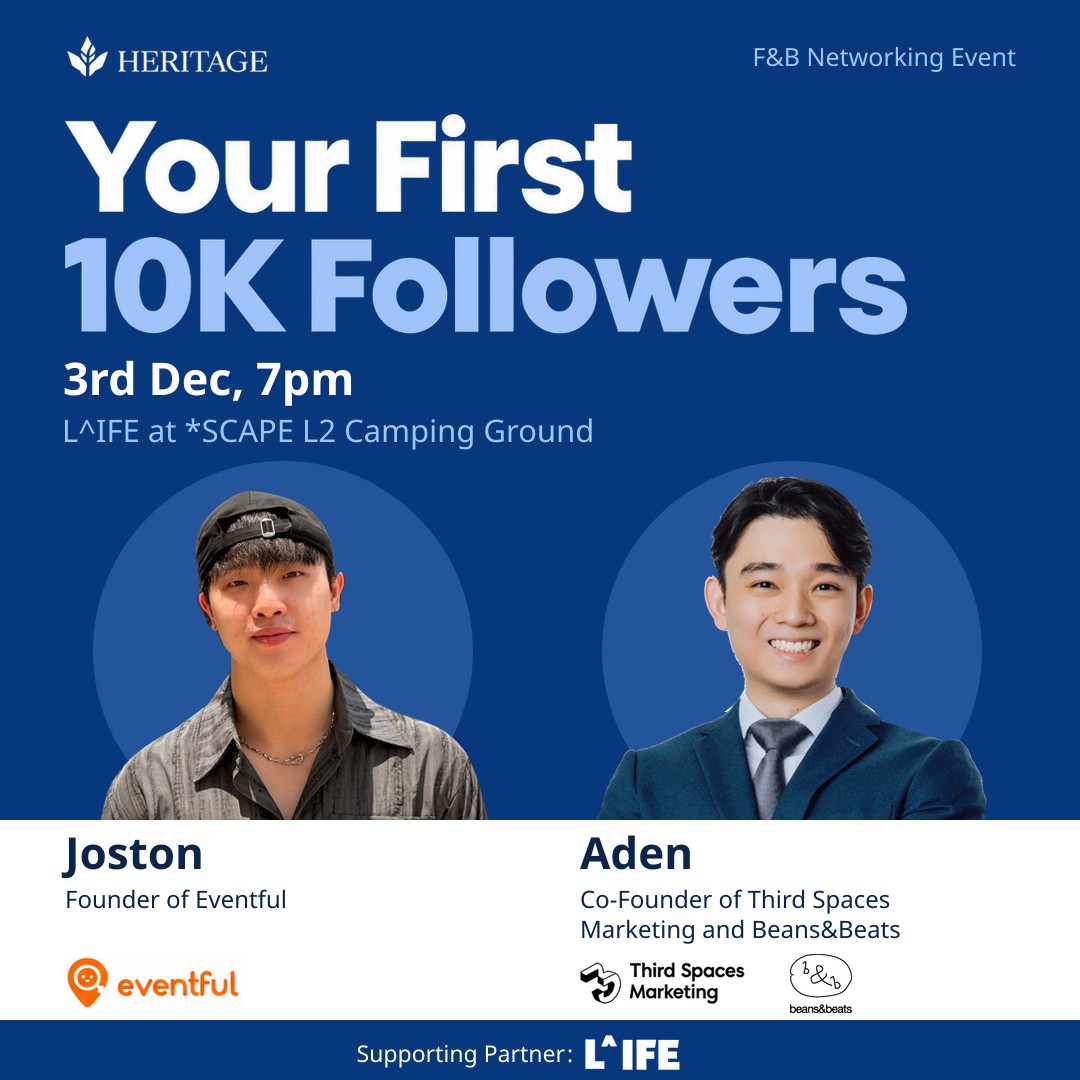
A milestone video can make an agency profile look persuasive. A restaurant owner still needs to understand the work around it: the starting point, the client’s role and the business objective. Aden Low’s supplied profile for the Heritage networking evening offers a useful occasion to ask those questions.
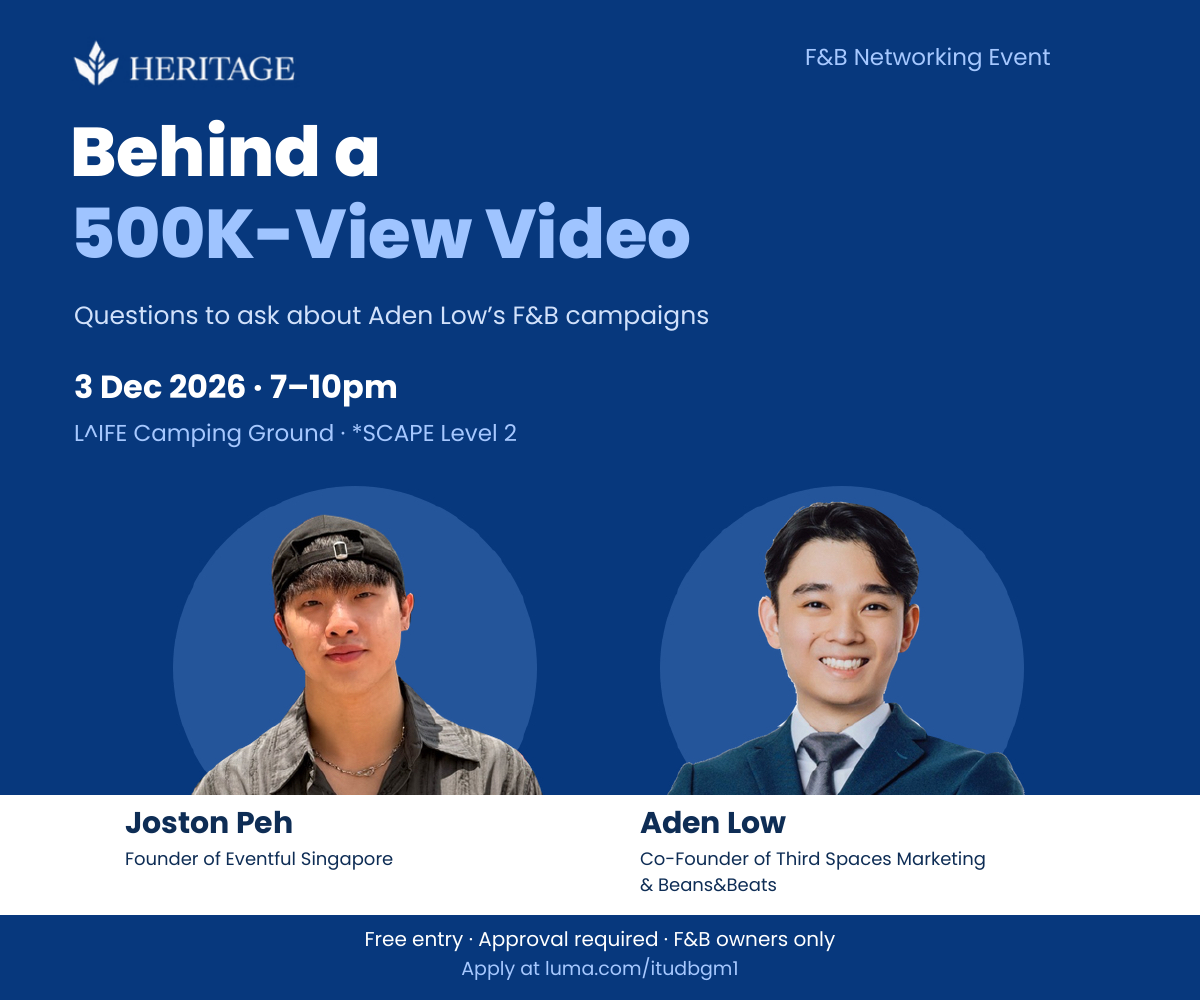
Photo: Heritage Singapore / Eventful Singapore
Start with the claim and its boundaries
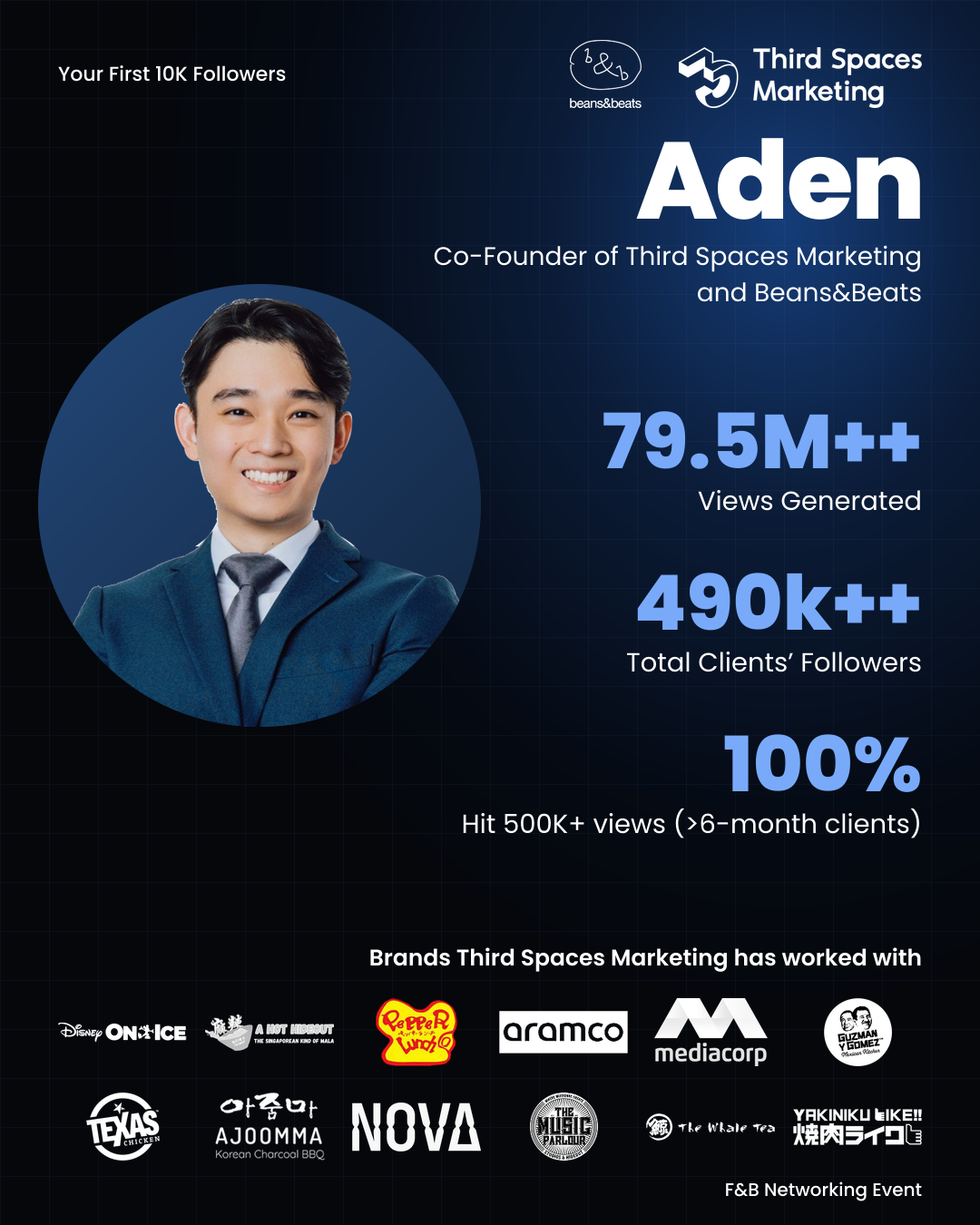
The supplied artwork introduces Aden as co-founder of Third Spaces Marketing and Beans&Beats. It reports more than 79.5 million views, more than 490,000 client followers, and that 100% of clients working with the team for over six months achieved a video with more than 500,000 views.
These are speaker-reported results from the event materials, not independently audited findings. The supplied claim does not provide the full client count, reporting window or individual campaign histories. It should not be rewritten as a guarantee that every future restaurant will achieve the same milestone.
A single-video result and a retained audience are different
A high-view video demonstrates reach under the relevant platform’s measurement. Followers describe another outcome, while enquiries, bookings and repeat customers require different evidence. Combining those figures into one success rate would lose the distinctions that an owner needs.
The practical follow-up is to ask what the original objective was. A new brand introduction and a weekday sales campaign can use different measures, even when both produce an engaging video. The most relevant example is the one closest to the restaurant’s own problem.
Ask what happened during the working relationship
The six-month qualifier makes the production process a useful subject for discussion. An owner can ask how ideas were developed, what the restaurant supplied, how approvals worked and how changes were made after weaker posts. The supplied artwork itself does not answer those questions.
A smaller team should also explain its constraints. Limited filming time, a founder who dislikes being on camera or a kitchen that cannot pause service all affect what can be repeated.
Look for the creative decision, not an alleged formula
TikTok’s advertising guidance describes a hook, body and close. That framework can help an owner discuss the anatomy of an example, but it does not prove which factor caused a speaker’s results or predict an organic post’s distribution.
A useful case walkthrough identifies the audience problem, the opening promise, the evidence shown and the next step. The owner can then ask what changed from an earlier attempt.
Bring one real restaurant problem
Before the session, an owner could select one recent post and write down its intended job, the available performance information and the unanswered question. Customer details do not need to be included. The aim is a focused discussion, not a public review of private reservation records.
For example, “People asked about the set but booked the wrong outlet” is more actionable than “The account needs to go viral”. It exposes a communication or destination issue that the team can investigate. The example is illustrative, not a reported Aden client case.
Take away a next experiment
A useful follow-through is a small change with an owner, a review date and a clear success measure.
Aden’s profile establishes the experience he reports bringing to the evening. The value for another business comes from understanding and testing relevant decisions, not assuming its results will mirror a headline.
A related conversation for F&B owners
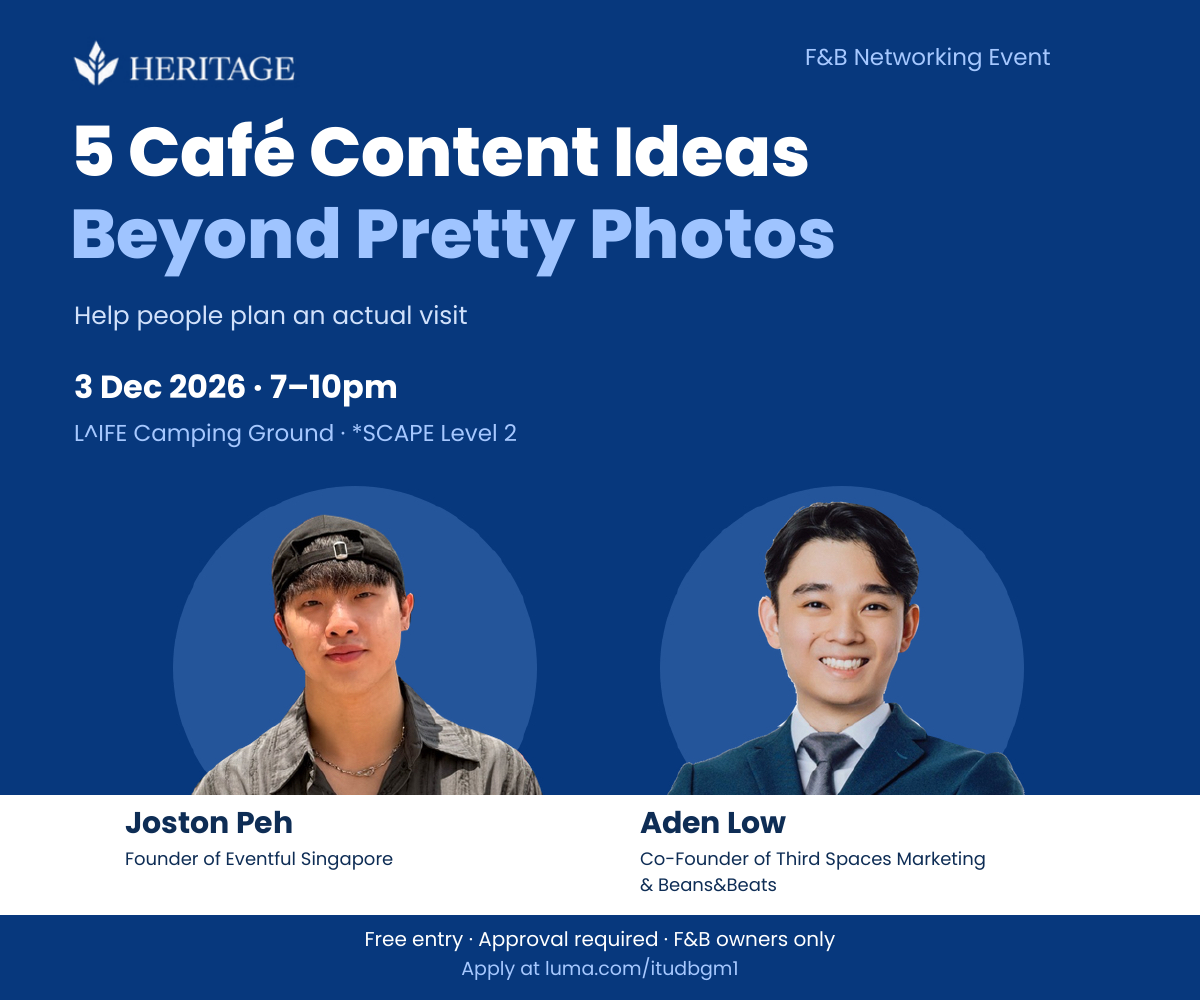
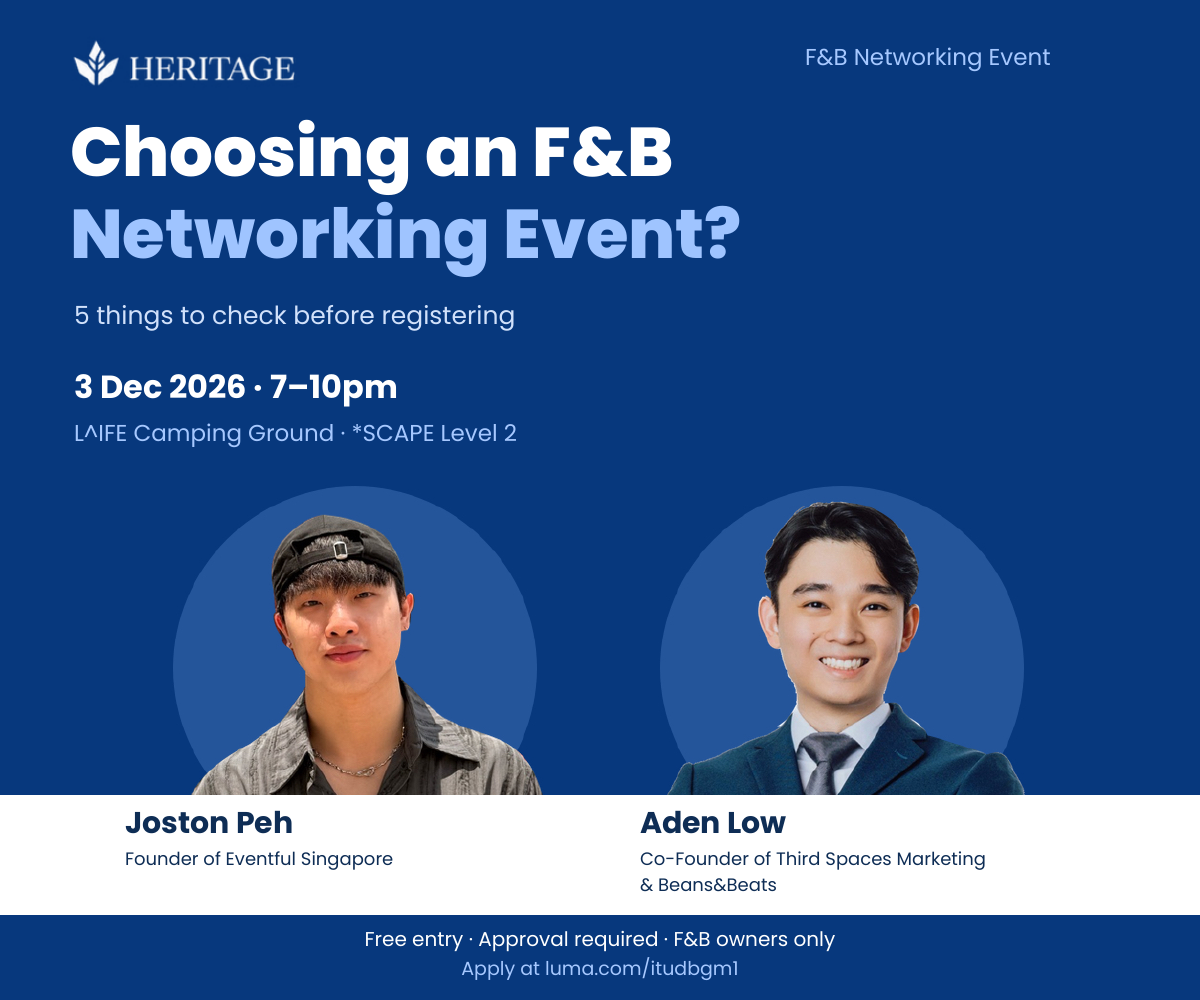
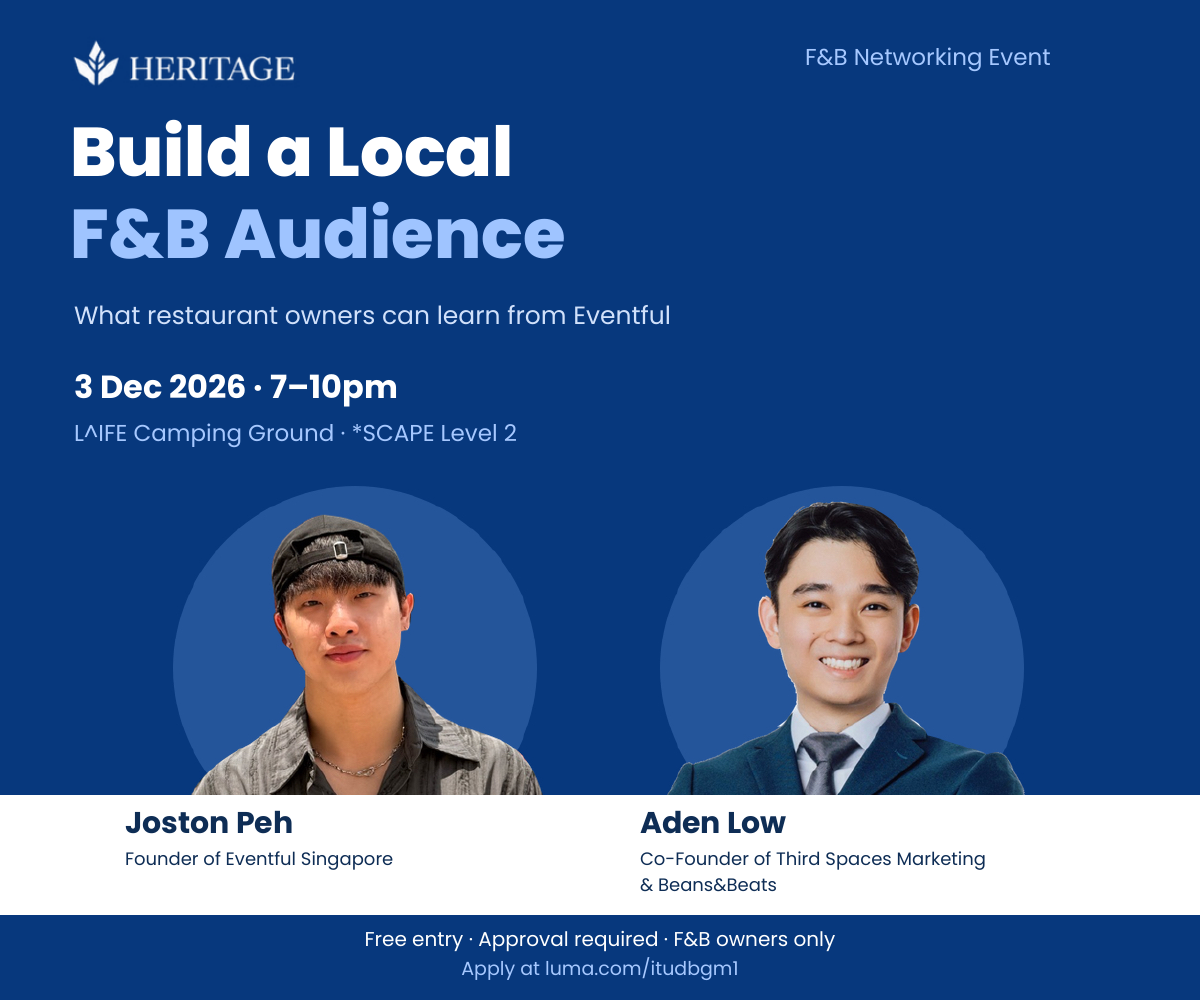
F&B owners exploring these questions can read about the Heritage networking evening on 3 December, from 7–10pm at L^IFE Camping Ground, Level 2, *SCAPE. Entry is free and strictly for F&B owners, with approval required. No food or drinks are provided. Current registration details are on Luma.