A Better Restaurant Creator Pitch: 5 Details to Send Before the Menu
A restaurant invitation that says only “collaboration?” gives a creator very little to assess. A useful pitch explains the story, audience, practical arrangements and proposed exchange. It also leaves room for the creator to decline. The following structure is an editorial template for a clearer conversation, not a claim that every invitation will receive a reply.
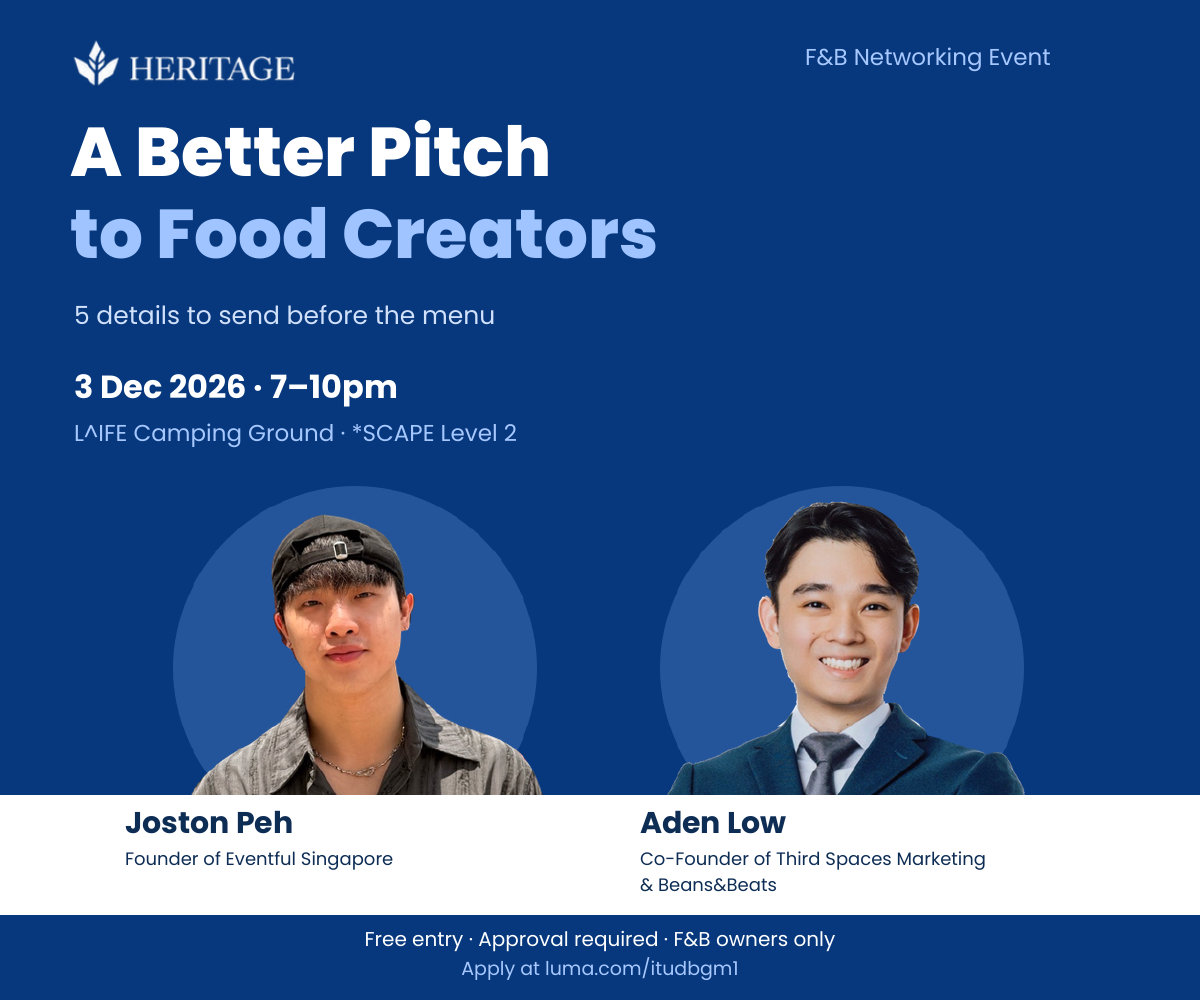
Photo: Heritage Singapore / Eventful Singapore
Lead with a story that fits the creator
The opening should explain why this specific creator is relevant. A neighbourhood food account may suit a weekday lunch opening; a family-focused account may suit a genuinely useful group meal. The restaurant should reference a real piece of the creator’s work, then state one concrete angle. A dish name, preparation detail or founder decision gives more substance than claiming the venue is a hidden gem.
For a food-product launch, the brief can name the exact product, pack size, selling price, stockist or order link, and the serving occasion being demonstrated. Restaurant bookings and retail product orders need different calls to action; a single invitation should make its intended next step clear.
State the proposed exchange plainly
The message should distinguish a paid commission, hosted tasting, gift or an invitation without an agreed posting obligation. A free meal should not quietly become a demand for several videos after the visit. If deliverables are expected, both sides should agree them first. Singapore’s government explanation of ASAS guidance says sponsored-content disclosures should be clear and prominent; that should be part of planning, not an awkward last-minute addition.
Make the visit easy to assess
The restaurant should supply the outlet, suitable dates, expected duration and the dishes available to feature. Relevant restrictions belong here too, such as a filming area that cannot accommodate extra equipment. Staff should know the visit is happening. A named contact helps prevent a creator arriving during service to find that nobody knows which menu, arrangement or table was discussed.
Separate factual checks from creative control
A useful brief identifies facts that need checking: prices, dates, ingredients, outlet exclusions and booking instructions. It need not dictate every reaction or sentence. If the restaurant wants approval before publication, the review scope and deadline should be agreed in advance. An honest collaboration leaves the creator room to describe the experience accurately rather than requiring praise that the visit did not support.
Finish with one answerable next step
The pitch can end by asking whether the creator is interested and requesting their rates or availability. Once terms are agreed, a short written summary should record deliverables, payment, reuse permissions and the reporting expected. Owners should avoid sending repeated identical nudges or assuming silence means acceptance. A relevant, complete invitation is easier to evaluate, even when the answer is no.
Discuss content with other F&B owners on 3 December
F&B owners can bring a specific content question to Heritage Singapore’s Your First 10K Followers networking evening, featuring Joston Peh and Aden Low. It takes place on 3 December 2026, 7–10pm, at L^IFE Camping Ground, Level 2, *SCAPE, 2 Orchard Link.
Entry is free, strictly for F&B owners and subject to approval. No food or drinks are provided. See the event details and apply on Luma →