Why You Always Leave IKEA With Things You Did Not Need
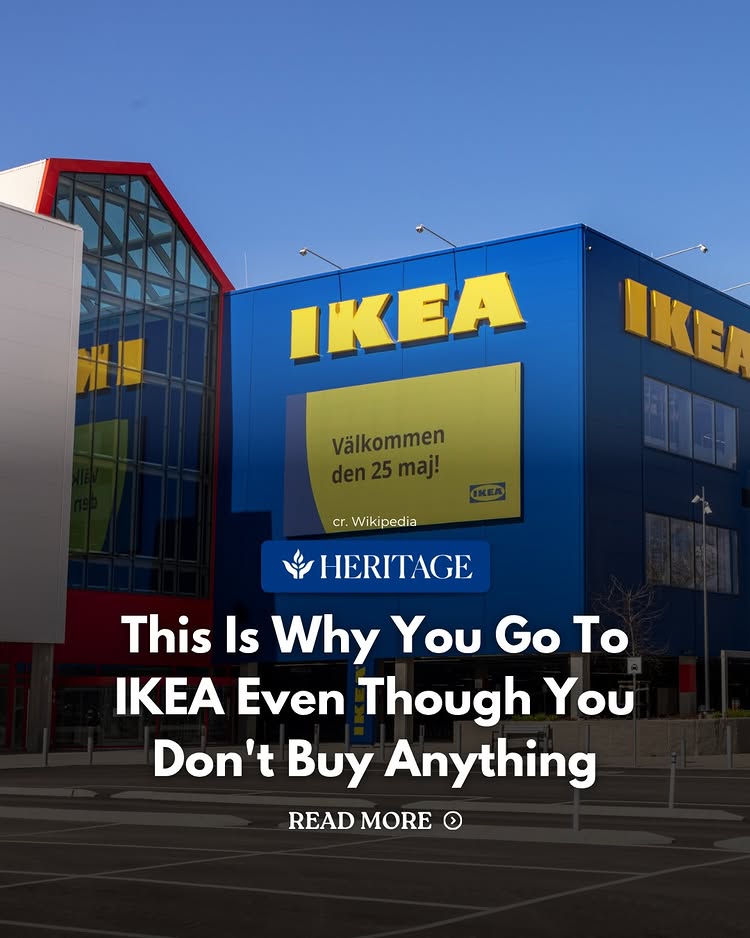
You go in for one thing, and two hours later you are eating a hotdog and holding four items you cannot name a use for. That is not weak willpower. IKEA's store is a one-way loop designed to walk you past its entire catalogue, and the effect it exploits has a name: the Gruen effect.
The layout is the sales strategy
Most shops let you walk in, grab, and leave. In a typical shop customers only lay eyes on about a third of what is for sale.
IKEA does the opposite. There is one path, it runs through 50-plus room settings, and the warehouse and tills sit at the end of it. You cannot shortcut to a lamp. You walk the whole loop, so you see close to everything.
Two smaller details do a lot of work. The showrooms have almost no windows, so you lose your sense of time the way you do in a casino. And because backtracking through the maze is genuinely annoying, anything you are half-considering goes in the bag now rather than on the way out. That is manufactured scarcity built out of floor plan alone.
The Gruen effect, and how to beat it
The Gruen effect is named after Victor Gruen, the architect behind the first enclosed American shopping mall. It describes the moment a store's layout disorients you enough that you forget what you came in for. Once the original mission is gone, you are browsing, and browsing is where the unplanned spending lives.
The counter is boring and it works. Write the list before you go, take a photo of the aisle and bin numbers from the showroom labels, then skip the showroom loop entirely using the shortcut doors, which exist on every floor even though the signage does not exactly celebrate them. Go straight to the warehouse, pull your items, leave.
Eat first. The hotdog and the meatballs are cheap on purpose, and a full loop on an empty stomach is how the trolley fills.
None of this is a reason to avoid IKEA. It is a reason to decide before you enter rather than during. Their sale events are worth planning around properly, as we did for the Swedish Midsommar sale and the warehouse sale.
Good to know
· Note the aisle and bin number in the showroom. It is the only thing you need in the warehouse.
· Use the shortcut doors. They are marked, they are legal, and they cut the loop by half.
· Eat before the showroom, not after. It is the single biggest change to what you end up buying.
· Go on a weekday morning. The maze is far less effective when there is nobody slowing you down in it.
FAQs
What is the Gruen effect?
It is when a store's layout disorients shoppers enough that they forget what they came in for and start browsing, which leads to unplanned purchases. It is named after architect Victor Gruen.
Is IKEA's maze layout intentional?
Yes. The one-way path routes shoppers past the full product range instead of the roughly one third of stock a customer sees in a normal store.
Can you skip the IKEA showroom?
Yes. Every floor has shortcut doors to the next section. Note your aisle and bin numbers first, then head straight to the warehouse.
Why are there no windows in the IKEA showroom?
It removes external time cues, so shoppers lose track of how long they have been inside and stay longer. Casinos use the same principle.
More like this
 Business Advice From the Founder of Unfiltered Presents8 July 2026
 Why Eldred Wee Built A Company In His Son's Name21 June 2026
 The Singapore Couple Behind Those $10,000 Custom Cakes10 June 2026