Thomson Nature Park: Village Ruins and a Manageable Walk
Choose Thomson Nature Park if you want a forest walk with village history, and make the conserved ruins your focus. Account for the approach from transport before choosing how much trail to add.
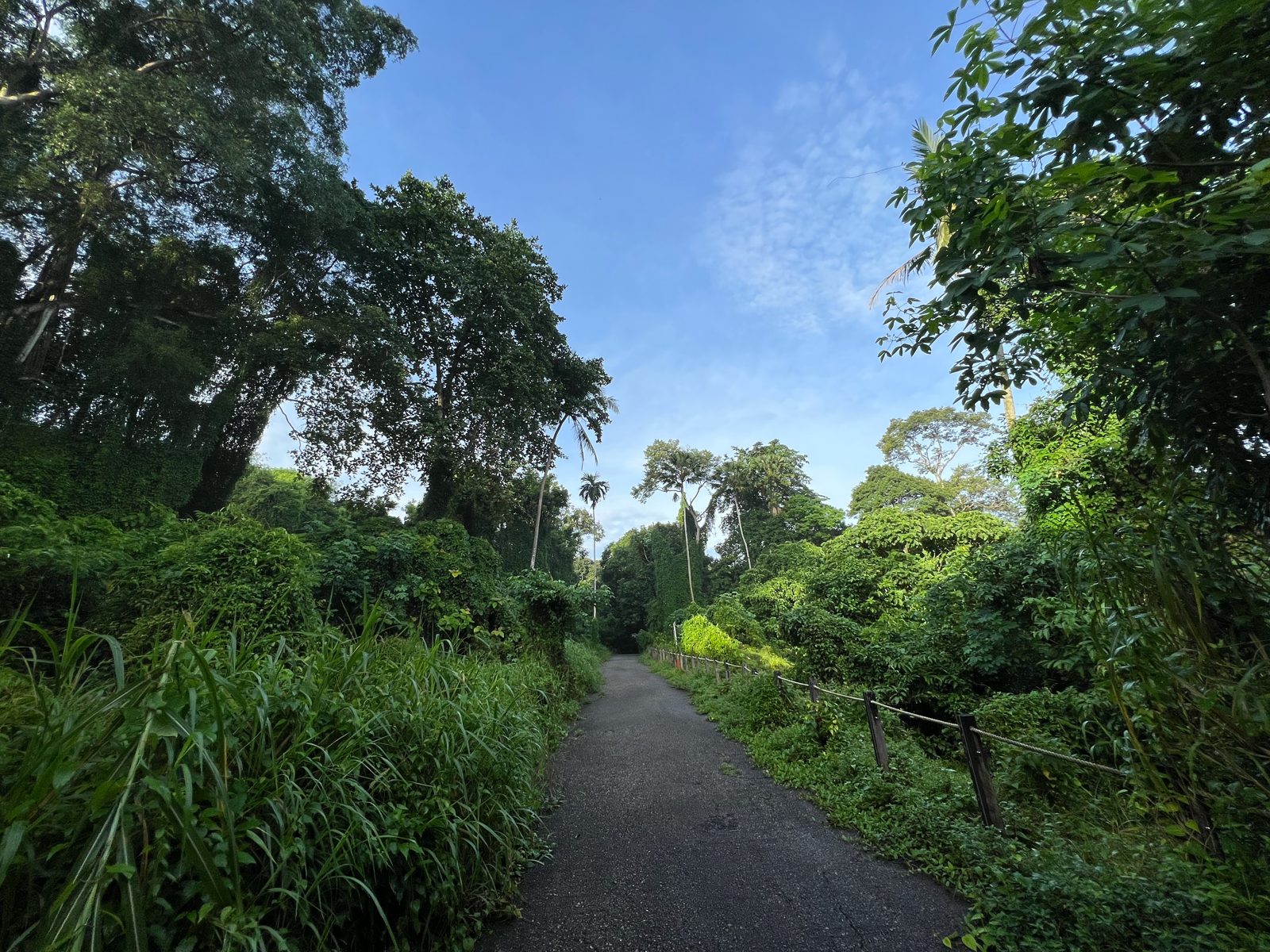
Image credit: Wzhkevin / Wikimedia Commons, CC BY-SA 4.0. Resized and JPEG-compressed. Adapted photographs retain the same licence.
The approach counts as part of the walk
For a heritage walk with a more urban setting, compare our Toa Payoh housing-history route.
NParks places the park between Old Upper Thomson Road and Upper Thomson Road. Its directions from Lentor MRT describe a 2.3km walk to the main entrance via Yio Chu Kang Road and Upper Thomson Road. That is before your park walk begins.
For a group with limited walking stamina, compare a bus connection or a suitable drop-off rather than advertising the trip as simply “near Lentor”. Share the exact entrance and return plan. Arriving at a different access point can change which loop makes sense and how long you will spend getting home.
Let the village remains set the pace
The conserved ruins and signs tell the story of a former village occupied by Hainanese and other immigrants from the 1930s into the 1980s. Read the interpretation as you go instead of treating every remnant as an unexplained abandoned-house photo.
Our suggestion is to select a marked route that gives you that historical focus, then return before everyone is tired. At the map board, check where the chosen loop reconnects with your entrance. A route is easier to manage when you can describe its finish before starting.
A forest route is not a step-free promise
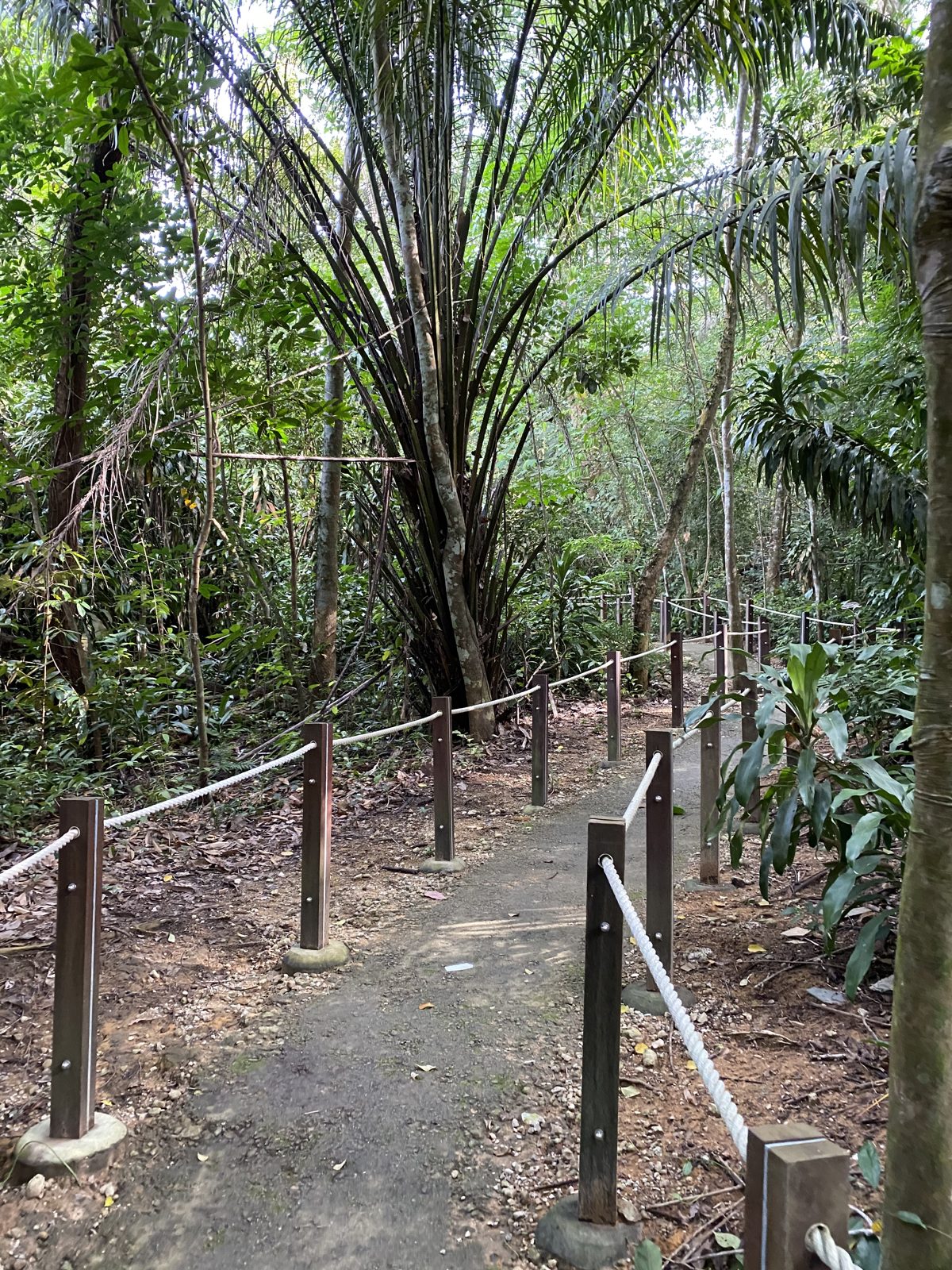
NParks specifies wheelchair access only at the entrance node. Do not extend that statement to the trails. If a member of the group needs a fully accessible outing, confirm a suitable alternative instead of hoping the path will become easier after the first rough section.
For walkers, wear shoes with grip and carry only what you need. Resist adding a second loop simply because the map makes it look close. Stopping to read history panels and waiting for others use real time, even though they do not increase your step count.
Wildlife is a reason to be quiet, not to chase
The park is an important conservation site for Raffles’ banded langurs. Their presence in the habitat is not a guarantee that you will see one during your visit. A good outing should still feel worthwhile if the only wildlife you notice is a bird or an insect.
Keep to designated trails, leave food packed and use distance rather than approach to observe animals. NParks prohibits pets and unauthorised vehicles on the nature-park routes. Do not climb ruins, step into vegetation or gather around a sighting to force a closer look.
Keep the return leg honest
Opening hours are listed as 7am to 7pm. Work backwards from an exit time that leaves a comfortable journey to your transport, not from the latest possible moment at a trail junction. Rain is a reason to shorten the plan, not take a supposed shortcut through the forest.
Save the map from the official park page and check current access information before travelling. Bring drinking water and avoid putting a tight meal booking after the walk. History reads better when nobody is repeatedly checking how late they are.
Find more independent outing ideas in the Eventful blog.
Good to know
· Include the 2.3km Lentor approach if using the official walking directions.
· The village remains are the main interest; wildlife sightings are a bonus.