← All posts
Live now: Wine Mystery BoxGet yours →

 Lawson Snacks Tier List: What Is Actually Worth Buying4 September 2026
 Singapore Shopping Malls Tier List: Jewel, ION and VivoCity in S-Tier2 October 2026
 5 Things You Only Know If You Go to Funan1 October 2026
This story started as a post on our Instagram@eventful_sg on Instagram
→
5 Things You Only Know If You Go to Funan1 October 2026
This story started as a post on our Instagram@eventful_sg on Instagram
→
JUST FOR FUNFULL STORY
5 Things to Do Before Visiting Japan for the First Time
28 August 2026 · From our Instagram
Five things to do before you fly to Japan: fill in Visit Japan Web, withdraw cash, book the popular attractions in advance, check the weather properly, and plan your train routes before you are standing on a platform. None of it is difficult. All of it is the difference between a smooth first day and a wasted one.
Do the paperwork and the money before you fly
1. Complete Visit Japan Web. It is the online immigration and customs declaration. Do it at home, save the QR codes offline, and you walk through instead of queueing at a kiosk after a seven-hour flight. 2. Prep your cash. Japan is far more card-friendly than it used to be, but the small places, the shrine stalls, the tiny standing bars and the older shops still take yen only. Get some out before you go, or at an airport ATM on arrival, not at 9pm in a back alley.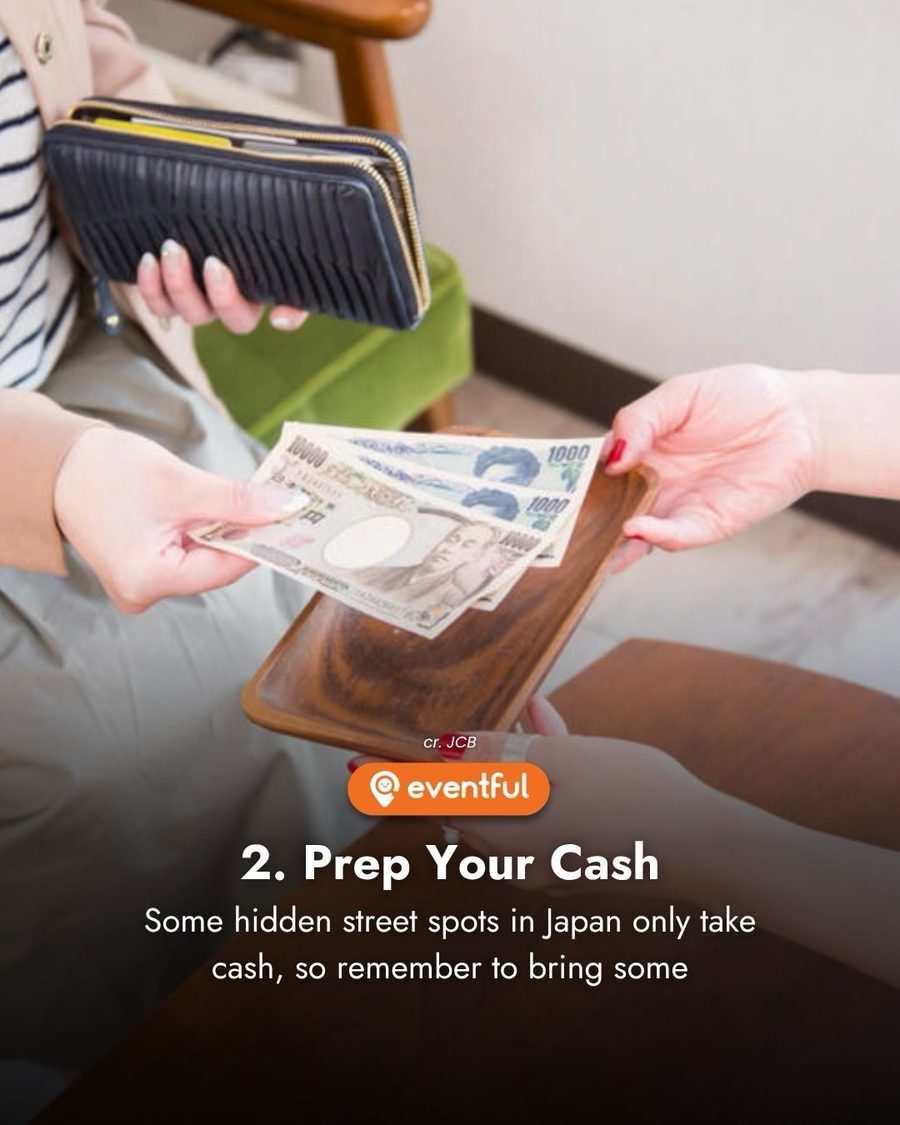
Book the popular things, or do not expect to get in
3. Book attractions in advance. The headline attractions sell their slots out weeks ahead, and turning up on the day is not a plan. That applies to the big theme parks, the observation decks and anything that trended in the last year. 4. Check the weather and dress for it. Japan is not one climate. Summer is genuinely brutal humidity, winter in the north is snow, and shoulder seasons swing 10 degrees in a day. Pack for the actual forecast, not for the postcard.
Learn the train map before you are standing in it
5. Plan your routes. Tokyo and Osaka run multiple overlapping operators, and one wrong train turns a 20-minute trip into 45. Pull your route up on Google Maps or a transit app the night before, note the line colour and the platform, and load an IC card. It is the single most common way first-timers lose an hour. If you like this format, our one-day Johor Bahru itinerary is the same idea, closer to home.
Good to know
· Screenshot your Visit Japan Web QR codes. Airport wifi at immigration is not something to rely on.
· Convenience store ATMs (7-Eleven, Lawson) accept foreign cards reliably. Many bank ATMs do not.
· Buy an IC card (Suica, ICOCA or the mobile version) on day one and stop thinking about single tickets.
· Check if your travel dates land on Golden Week, Obon or New Year. Prices and crowds double.
FAQs
What is Visit Japan Web?
It is Japan's online immigration and customs declaration system. You fill it in before you fly and present the QR codes on arrival, which is faster than doing it at an airport kiosk.
Do I still need cash in Japan?
Yes, some. Cards work in most chains and city shops, but smaller stalls, older restaurants and some shrines and markets are cash only.
Should I book attractions before going to Japan?
Yes for the popular ones. Theme parks, observation decks and anything currently trending routinely sell out their timed slots ahead of the date.
What is the easiest way to handle trains?
Get an IC card such as Suica or ICOCA, and check your route in a transit app before you set off. Multiple operators run overlapping lines, so the wrong train costs real time.
More like this
Lawson Snacks Tier List: What Is Actually Worth Buying4 September 2026Singapore Shopping Malls Tier List: Jewel, ION and VivoCity in S-Tier2 October 20265 Things You Only Know If You Go to Funan1 October 2026#singapore#sgtiktok#japan