After the Viral Post: 5 Ways to Make a Weekday Visit Easier
A busy weekend after a popular post does not automatically solve a quiet Tuesday. A weekday content plan needs a different question: what would make a real customer choose this restaurant for an ordinary visit? The answer may be clarity and convenience rather than another dramatic discount.
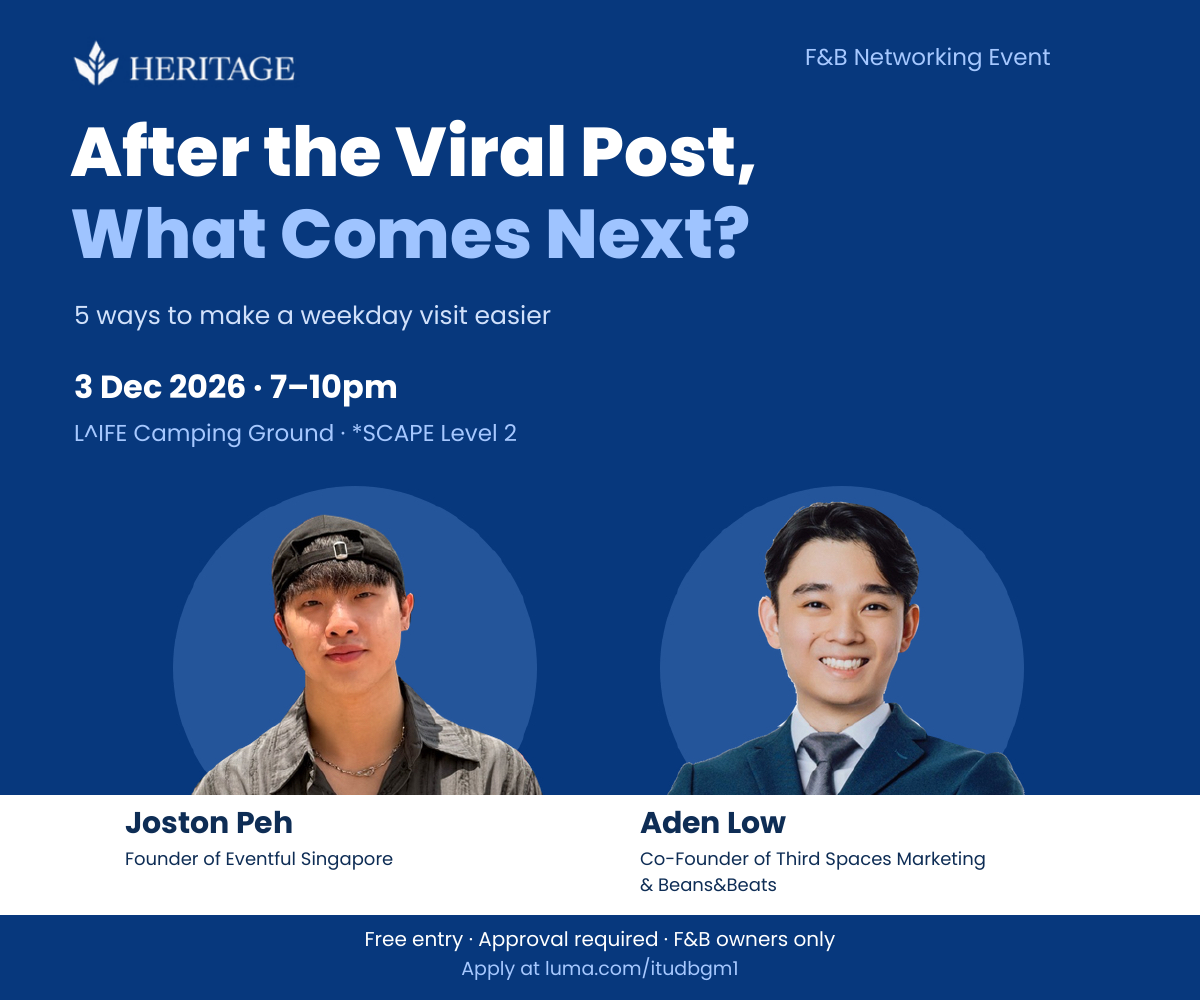
Photo: Heritage Singapore / Eventful Singapore
1. Name a real weekday occasion
Lunch between meetings, an early family dinner and a quick solo meal are different needs. A restaurant can choose an occasion that its location, menu and service can genuinely support. The post should show that visit rather than rely on a generic invitation to come back.
For a hypothetical office-lunch feature, a clear tray, portion and outlet location may be more useful than a montage of a Friday-night crowd. Any claim about speed should reflect the service the restaurant can actually deliver.
2. Explain the offer without hiding the conditions
If there is a weekday set, identify the available days, service window, applicable outlet and inclusions. Show the price basis clearly. An offer should not sound available all day when it is limited to a narrow period.
Google Business Profile supports offer posts with dates and times, plus optional terms and links. The practical lesson is to maintain those details wherever the offer appears, not just in the original social caption. Platform features and availability should be checked in the restaurant’s own account.
3. Give past visitors a new useful detail
A follow-up post can explain another dish, a sharing combination or an ordering question the team hears repeatedly. It need not pretend every update is a new launch. A customer who already knows the brand may need a reason that fits a different occasion.
The team can collect common questions during service without recording diners’ personal details. Those questions are ideas for content, not evidence that everyone wants the same thing.
4. Keep retention permission-based
A business should not assume that a booking or public comment grants permission for marketing messages. Any email or messaging follow-up needs an appropriate permission process and an easy way for the recipient to stop receiving it. This guide does not replace the business’s privacy or legal review.
Public posts and an up-to-date website remain useful even when a customer has not joined a mailing list. The goal is to make information easy to find, not to chase every previous diner across channels.
5. Measure the return visit separately
A restaurant can compare actual weekday bookings or attended covers where its records support that analysis. Repeat visits need a consistent definition and a legitimate way to identify them; social engagement alone cannot establish a return meal.
Review the offer alongside staffing, stock and service feedback. A campaign that fills a period the team cannot serve well creates another problem. Useful marketing should fit the restaurant’s operation, not merely make a calendar look busy.
Related: meet other F&B owners
Heritage Singapore’s Your First 10K Followers networking evening takes place on 3 December 2026, 7–10pm, at L^IFE Camping Ground, Level 2, *SCAPE. The session features Joston Peh and Aden Low. It is free, strictly for F&B owners and requires approval. No food or drinks are provided. Check details and apply on Luma.