HERITAGE · F&B BUSINESS GUIDES
5 Restaurant Video Openings That Give People a Reason to Keep Watching
18 November 2026 · Updated 18 November 2026
A restaurant logo followed by a slow pan does not explain why someone should stop scrolling. An opening works harder when it makes a specific promise that the rest of the video can deliver. These five examples are editorial starting points, not proven viral scripts.
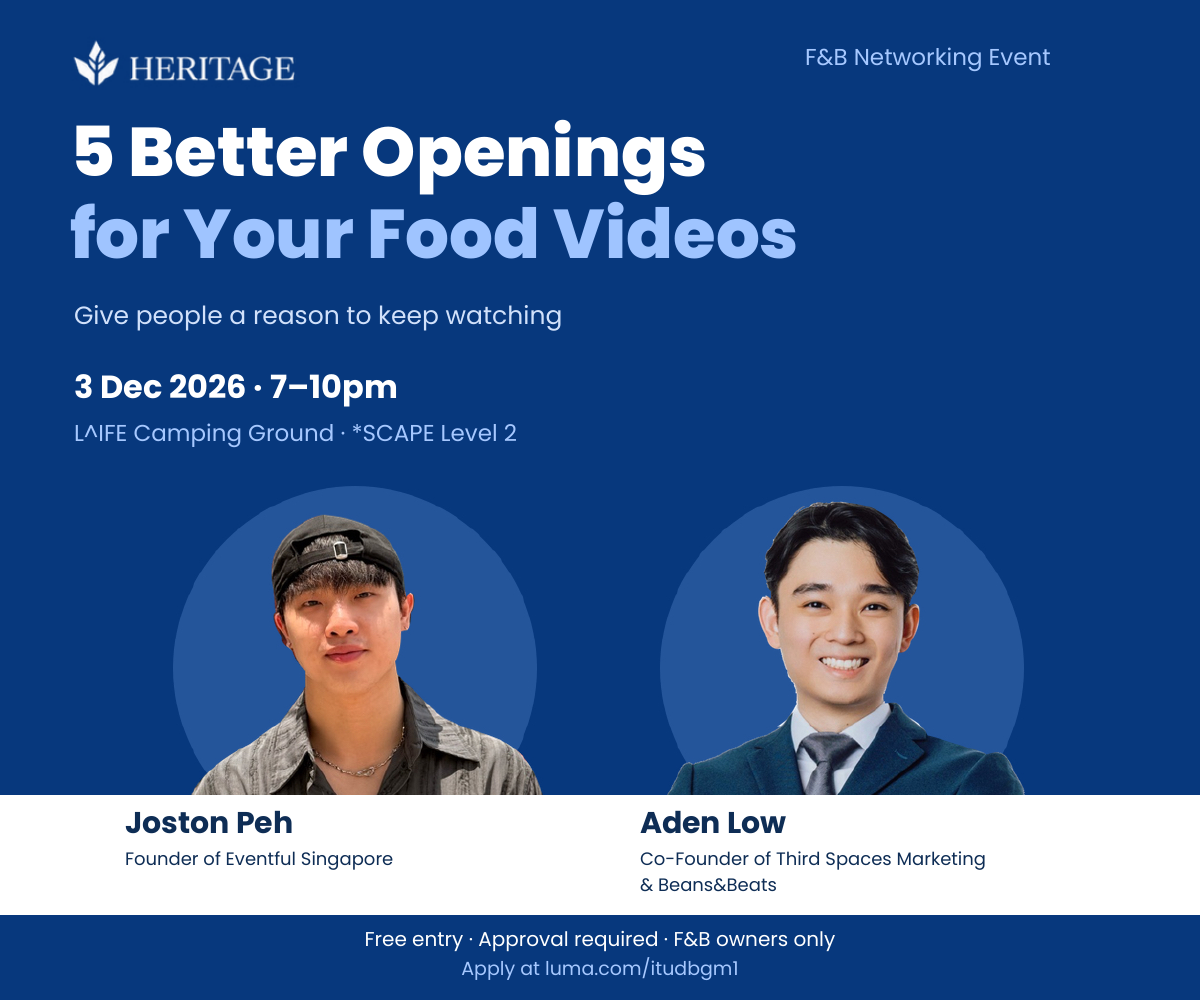
Photo: Heritage Singapore / Eventful Singapore
1. A price question with a complete answer
An example is: “What does this weekday lunch set actually include?” The opening frame can show the full set rather than a close-up that hides its size. The body then identifies inclusions, current price basis, applicable outlet and timing.
The real price belongs in the finished post only after the restaurant checks it. A low headline price that excludes essential charges or describes an unavailable set may attract attention while making the visit harder.
2. A local discovery with a route
“This café is upstairs, not on the street” gives a viewer a concrete problem and a reason for an exterior shot. The sequence can move from a recognisable approach to the entrance, then the dish or experience worth the detour.
The local detail should be genuine. A business need not call itself hidden or undiscovered when it is neither. A clearly filmed turn, lift entrance or landmark can be more helpful than another unsupported “best-kept secret” claim.
3. A founder decision with a consequence
“The owner removed the most requested dish. Here is why” can open a story only when that decision actually happened and the owner is prepared to explain it. The follow-through needs the trade-off, what changed and what the team learned.
A smaller real decision is better than manufactured drama. Changing a preparation method or reducing a menu can reveal judgement without turning a restaurant’s history into a motivational slogan. Quotes should be approved for accuracy, not rewritten into invented conflict.
4. A group-chat dilemma
“One friend wants a light meal. Another wants a proper feast” creates a recognisable dining situation. The next shots can show genuinely different menu choices and how the group would order, rather than promising that one venue suits absolutely everyone.
The practical answer might include seating, sharing portions or different service times. Allergy, dietary and accessibility claims need checking with the venue. A fun opening should not imply capabilities that staff cannot confidently deliver.
5. Kitchen action with an explanation
A fold, pour, cut or final assembly can provide an immediate visual question: what is happening, and why does it matter? One clear explanation from the cook can turn satisfying footage into information about the dish.
TikTok’s advertising guidance recommends a hook, body and close. That is a useful planning structure here, not proof of organic results. After the opening, the video still needs to deliver its answer and a relevant next step.
Choose the opening after choosing the evidence
Before filming, the team can write the promised answer beside the available shot. If the answer is weak or the evidence unavailable, a different opening is needed. A kitchen process does not need a price challenge pasted on top of it.
Testing two openings across comparable content can produce a useful working hypothesis. It cannot establish a universal watch-time threshold or guarantee reach. The strongest practical standard is simpler: the viewer receives what the first frame promised.
A related conversation for F&B owners
F&B owners exploring these questions can read about the Heritage networking evening on 3 December, from 7–10pm at L^IFE Camping Ground, Level 2, *SCAPE. Entry is free and strictly for F&B owners, with approval required. No food or drinks are provided. Current registration details are on Luma.