Eventful’s Reported 11.8M Monthly Views: What F&B Owners Can Learn to Ask
A large audience number becomes useful to a restaurant only when it answers a business question. Ahead of the Heritage networking evening, Eventful founder Joston Peh’s current organiser-supplied description reports 11.8 million monthly views and a 91% Singapore audience. Those figures provide a starting point for a conversation, not a forecast for another restaurant.
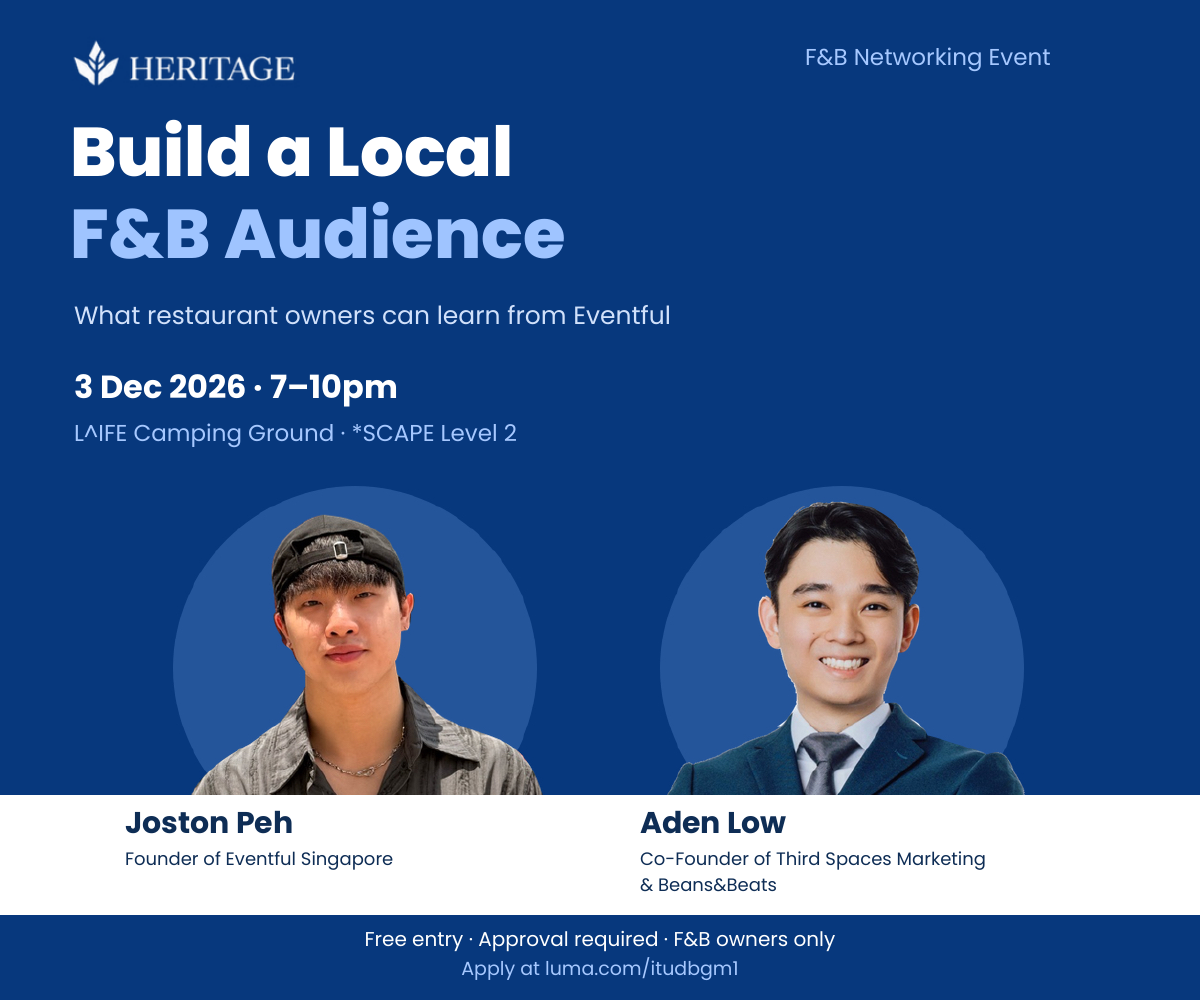
Photo: Heritage Singapore / Eventful Singapore
What the supplied profile actually reports
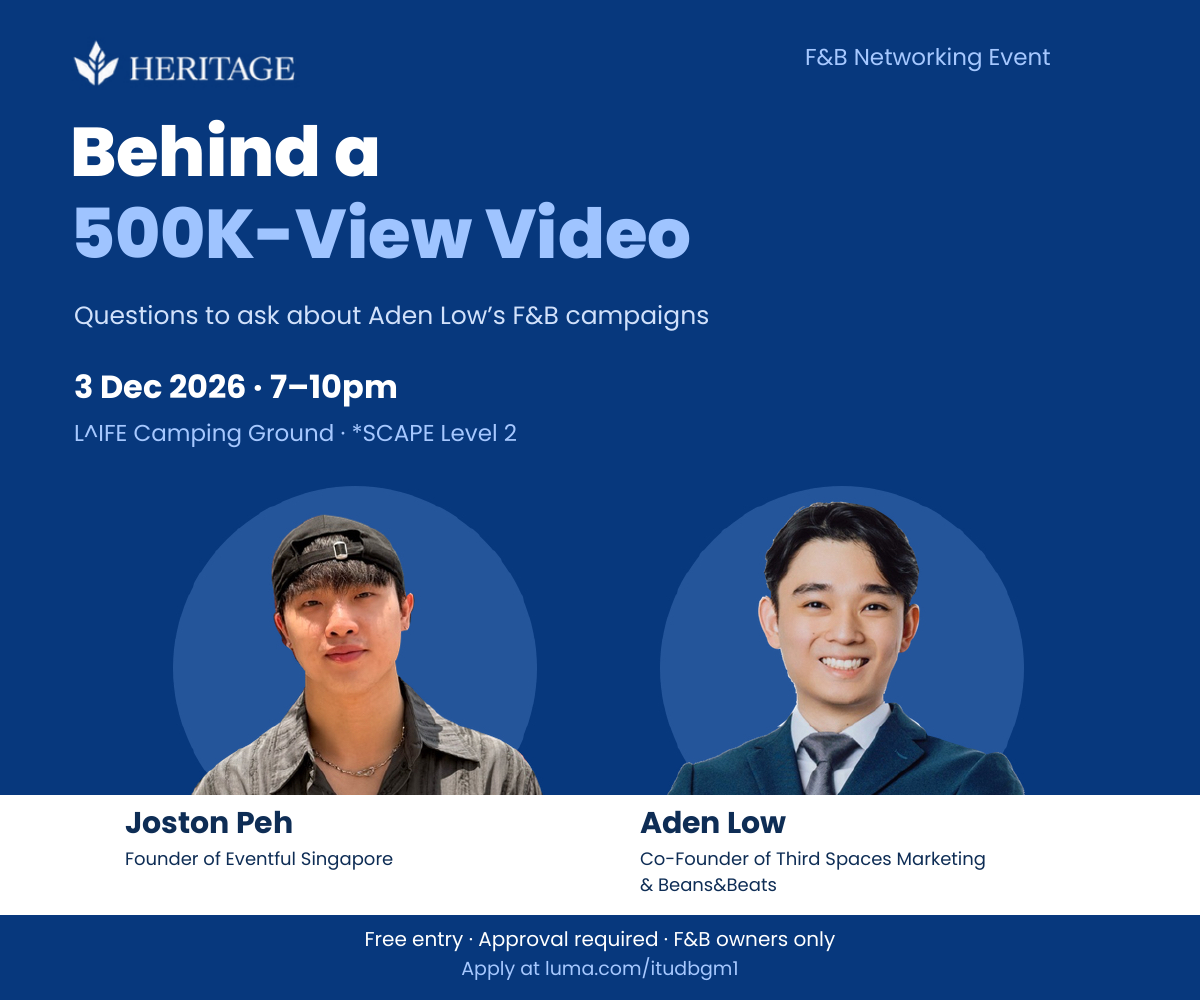
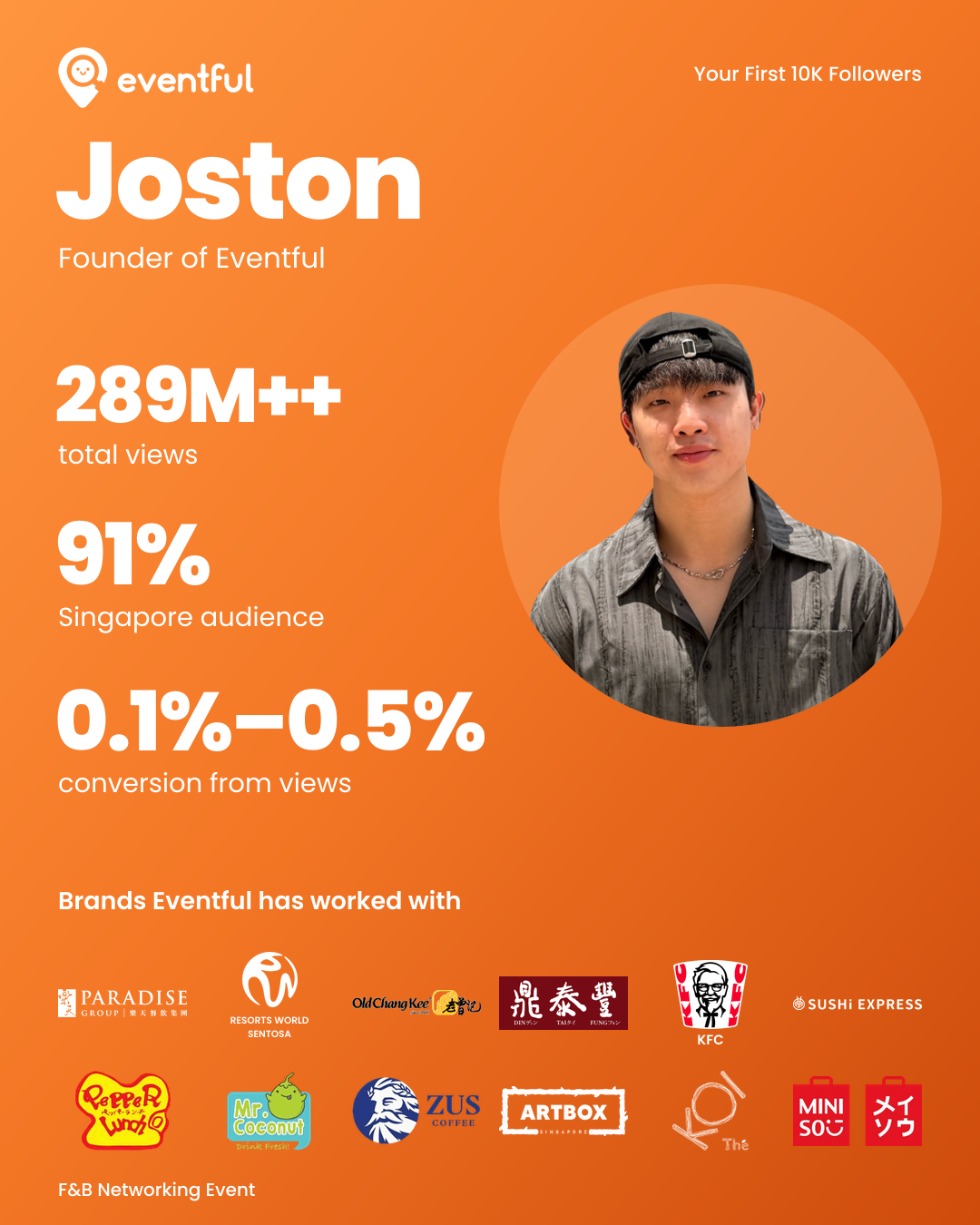
The organiser’s current description reports more than 350 million total views. The supplied speaker artwork instead shows 289M++ total views and 91% Singapore audience, without the monthly figure. These are different supplied snapshots; they should not be silently presented as one audited dashboard.
Eventful publishes this analysis about its own founder. The reporting periods and methodology are not fully specified, so the figures are attributed claims, not a forecast or a verified explanation of what caused the results.
Local relevance is the first question, not the final answer
The reported Singapore audience share matters because a Singapore restaurant needs potential diners who can realistically visit. But country-level audience location does not reveal an individual outlet’s catchment, typical dining budget or preferred occasion.
A restaurant comparing a media opportunity can ask which account, reporting period and metric the location figure describes. It can then explain its own practical situation: weekday office lunches, destination dinners or a neighbourhood repeat visit. That makes the discussion more precise than asking for “more exposure”.
A content proposition needs a reason to visit
A restaurant’s strongest filming idea might be a recognisable dish, a specific set or a founder decision that explains the menu. The editorial task is to connect that idea with something a viewer can actually do next. This is a recommendation, not a reconstruction of Eventful’s past campaign methods.
The team should bring a current menu, applicable outlets and clear operational limits to a planning conversation.
Views and customers require different records
The speaker materials refer to conversion experience, but a reported range should not be applied to an unrelated restaurant’s views. Platform exposure, link visits, confirmed reservations and attended diners are different measures. A causal claim needs evidence that connects the relevant campaign with the outcome.
Google Analytics documents campaign tagging for traffic measurement. Where a restaurant’s booking system also supports suitable tracking, those records can help build a clearer chain. Tags alone do not prove an offline visit, and unattributed walk-ins should not be automatically credited to one post.
Three useful questions to take into the room
An owner can ask: which audience and time period does the example describe; what did the restaurant need to prepare before publication; and how was the claimed business outcome recorded? These questions turn a headline figure into an operational discussion.
A second layer is the constraint: what did not work, what changed and what would the speaker do differently for a smaller team?
The takeaway is a better brief
A useful result of studying this profile is a sharper campaign brief: the relevant local audience, a truthful creative proposition, a working destination and an agreed way to evaluate outcomes.
The upcoming session offers a chance to hear Joston’s experience directly. It does not guarantee audience growth or a particular booking result for attendees.
A related conversation for F&B owners
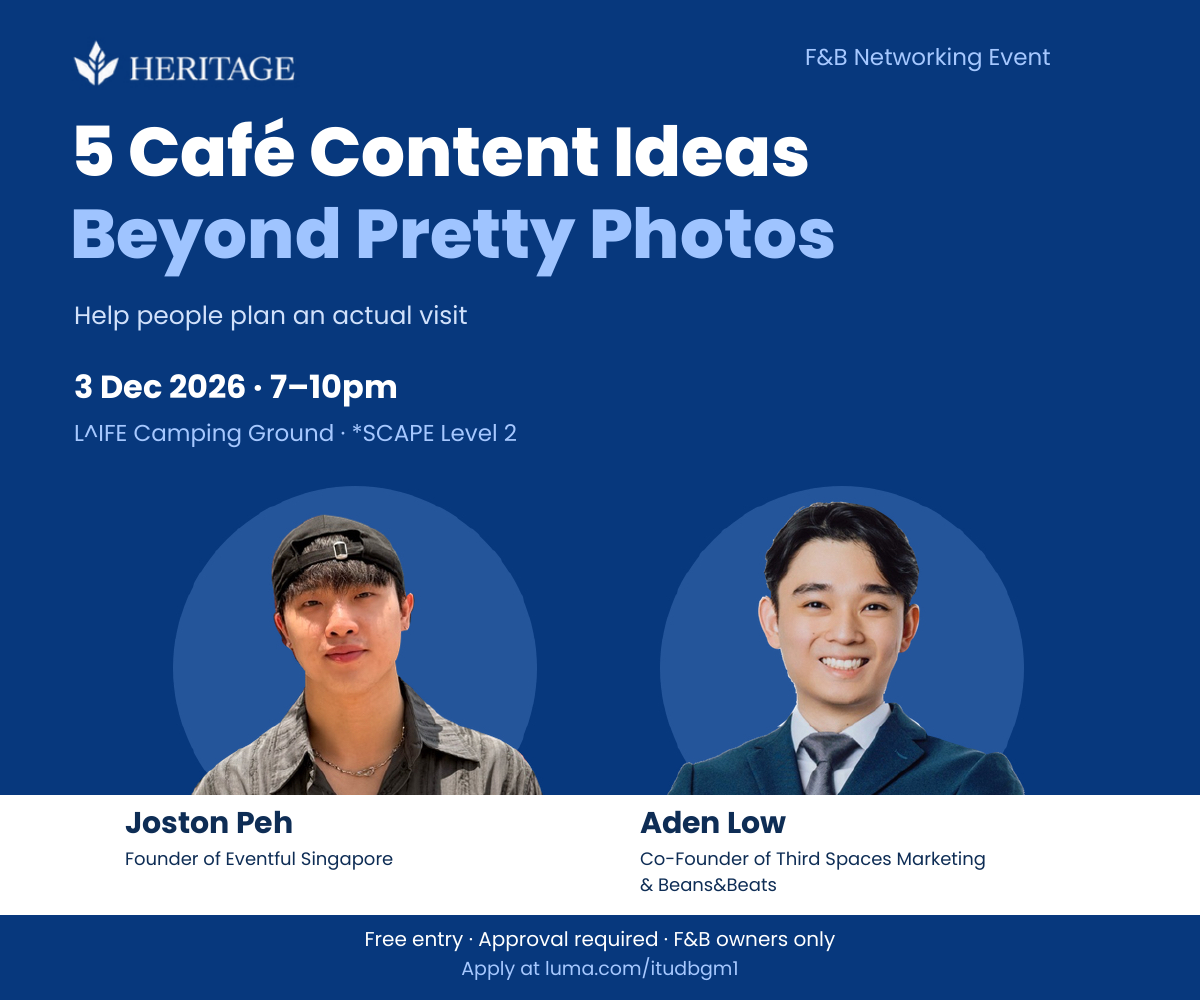
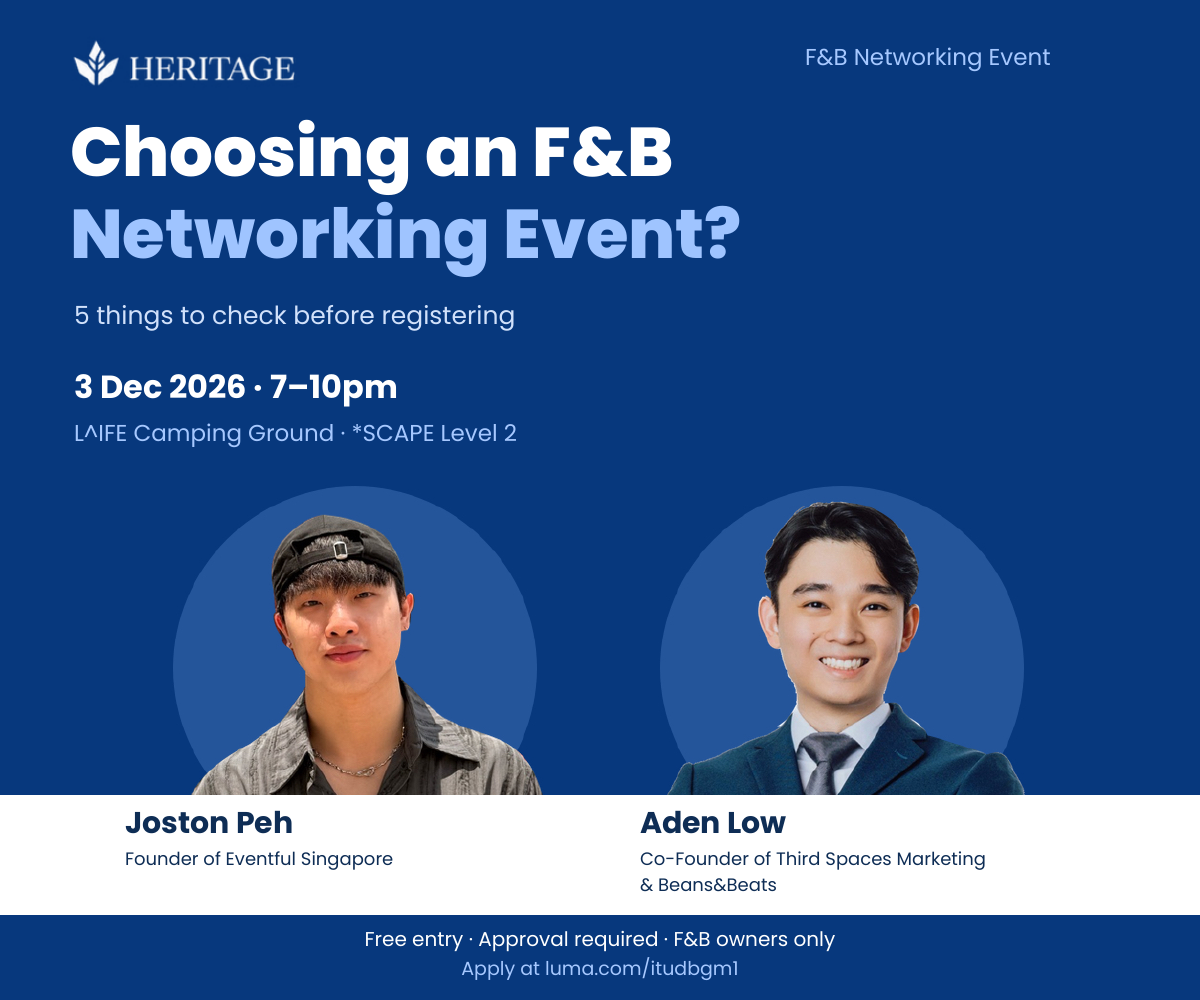
F&B owners exploring these questions can read about the Heritage networking evening on 3 December, from 7–10pm at L^IFE Camping Ground, Level 2, *SCAPE. Entry is free and strictly for F&B owners, with approval required. No food or drinks are provided. Current registration details are on Luma.