Supermama Asked Five Design Studios What Singapore Should Look Like on a Plate
Edwin Low wanted a better Singapore souvenir. He did not need to learn every part of making porcelain to create one. Supermama brought together five design studios and Japanese producer KIHARA for a collection that won Design of the Year at the 2013 President’s Design Award.
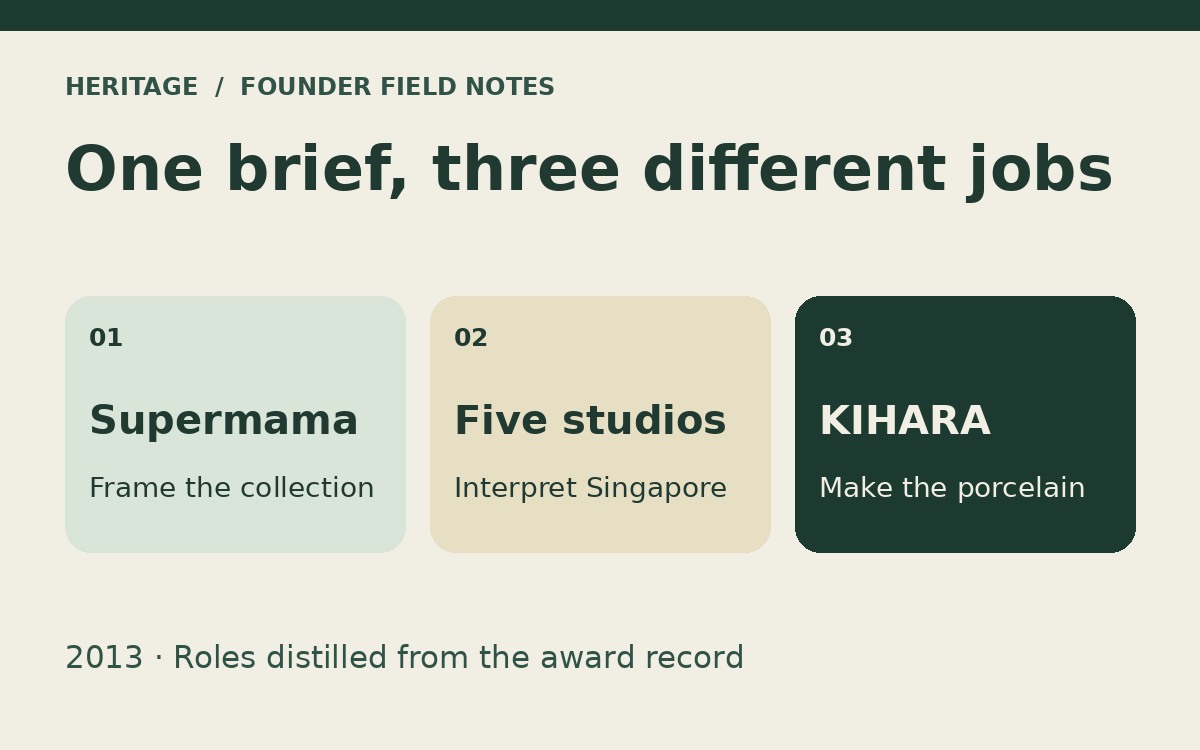
The brief was Singapore, the maker was in Arita
Supermama’s account traces Low’s interest in Japanese craft to a visit to a Kyoto papermaker in 2005. It describes an encounter with KIHARA in 2013. The President’s Design Award records the result as Singapore Icons, a Supermama initiative with five studios invited to interpret familiar local subjects.
A collaborator did not replace the founder’s job
The award record credits complementary work. The studios supplied different readings of Singapore and KIHARA brought porcelain manufacturing expertise. Supermama set up the collection as a single project instead of presenting unrelated pieces with a common shop logo.
An award recognises the finished design, not a percentage return. The published sources do not establish the sales economics of the run.
Make a spec where one craft meets another
A founder commissioning an artisan can decide which parts of the brief must stay fixed and which are open to the maker’s judgement. Ask for a sample that tests both how the item is made and whether customers recognise what it is about. A defect test and a five-person recognition test answer different questions.
The collaboration is worth doing when each partner contributes a capability genuinely missing from the other side.