“Is There a Step at the Door?” How Restaurants Can Write Better Access Notes
A guest asks whether they can enter without using stairs. “We’re accessible” sounds helpful until it turns out that the flat door is round the back, or the lift stops one floor short. A better access note describes the route, not a label.
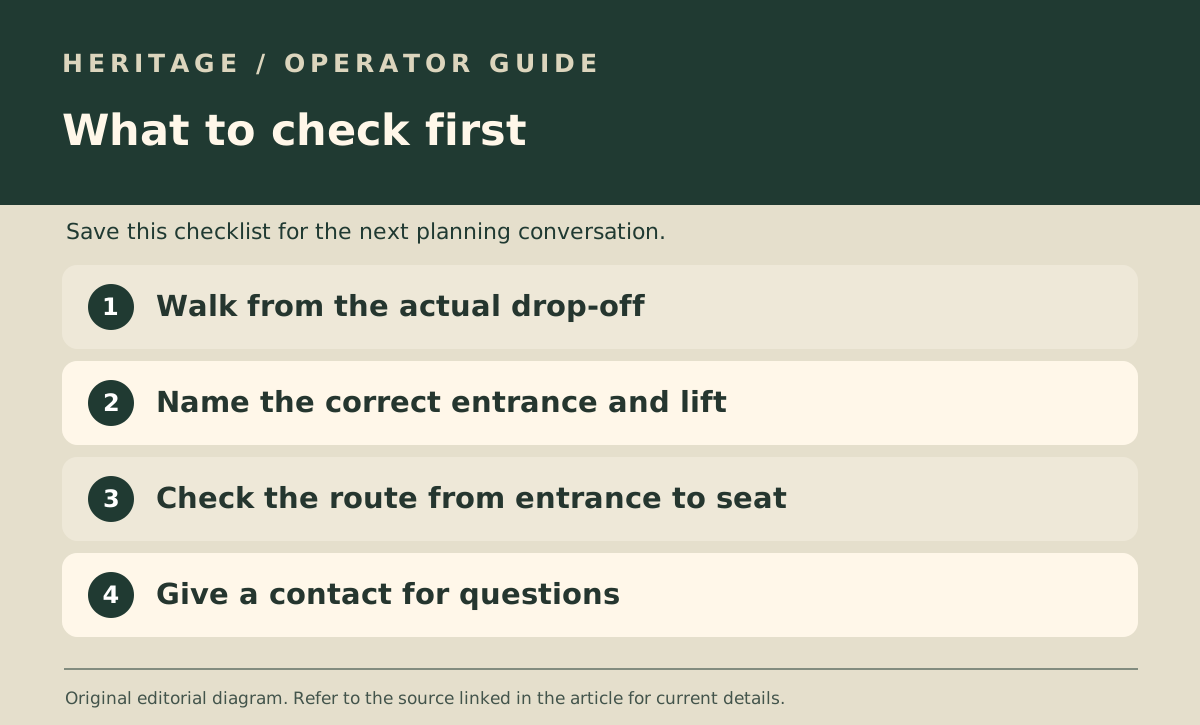
Walk it from the place guests actually arrive
Start at the nearest drop-off point or mall entrance people are likely to use. Note the exact door, level and lift if one is needed. If there is a step at the usual entrance but an alternative is available, explain where that entrance is and whether staff need to open it.
BCA’s Universal Design guides cover how people approach and use buildings. Treat this walk-through as a way to communicate about your own venue, not a substitute for assessing it against the applicable code.
Describe the dining room, not just the street
Check whether a guest can go from the entrance to a table without steps. Record any narrow or awkward part of the route that staff can explain. If the accessible toilet is in the mall rather than within your restaurant, name the level and landmark after you have checked them.
Put the answer beside the venue address or booking instructions. When the easiest entrance changes after a mall’s usual hours, include that difference rather than sending diners to a closed door.
Use plain instructions and a real contact
Use one photo of the correct door and a caption with a landmark. Describe the path in text too, since a photo cannot tell the whole story. Leave out “fully accessible” if the team has only checked the entrance.
Ask a colleague to follow the written directions without prompting. Fix the first place they hesitate, then review the note if renovation, furniture or the mall route changes.