A Supplier Flags a Food Recall. Can Your Team Find the Right Batch?
A product name is easy to search in the till. It does not tell a manager which carton landed in the storeroom on Tuesday. The useful recall rehearsal starts with a real package and ends with the delivery it came in on.
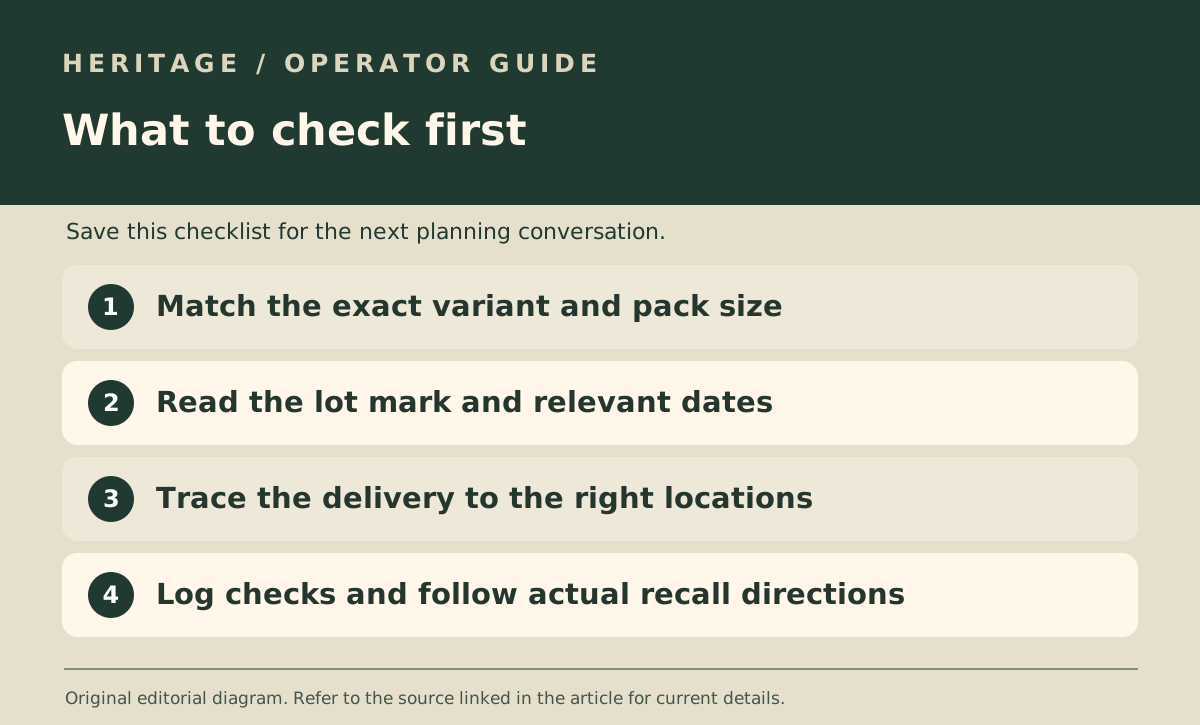
Read all the identifiers in the notice
SFA notices can distinguish affected versions by product name, pack size, batch number and expiry date. Its February 2026 notice about certain Milo Snack Bars is a historical example: it listed separate batch numbers and pack sizes for the Original and Dipped versions. It is cited here to show how the notice was written, not as a current alert.
Use the current notice and supplier instructions for an actual recall. Comparing names and front-of-pack photos alone can miss important identifiers on the package. Do not assume an item is unaffected if the lot or date cannot be read.
Practise the trace on a regular delivery
Pick one sealed item you normally stock. Ask the shift lead to point to the lot mark on the item or case, match it to the delivery record and identify which outlet or shelf got that delivery.
SFA’s labelling guide explains that lot identification helps businesses trace affected products. Your drill reveals where the link breaks; for example, an outer carton may be discarded before its mark is copied to a receiving record. Fix that handoff rather than asking staff to remember it later.
Make the real escalation route easy to find
Keep the supplier contact and the staff member responsible for following up with the notice together. If a matching or uncertain item turns up during an actual recall, stop selling it pending checks and follow the directions given by the supplier and SFA.
Record which locations checked, what was found and which locations still have not replied. That final column is useful for an operator with more than one outlet: silence is not a completed check.