Too Much Food in the Bin? Measure One Service Before Changing the Menu
An untouched tray at closing and the last few bites on every plate can look like the same problem when they land in the same bin. They usually need different fixes. A single service is enough to start seeing which question a cafe should ask first.
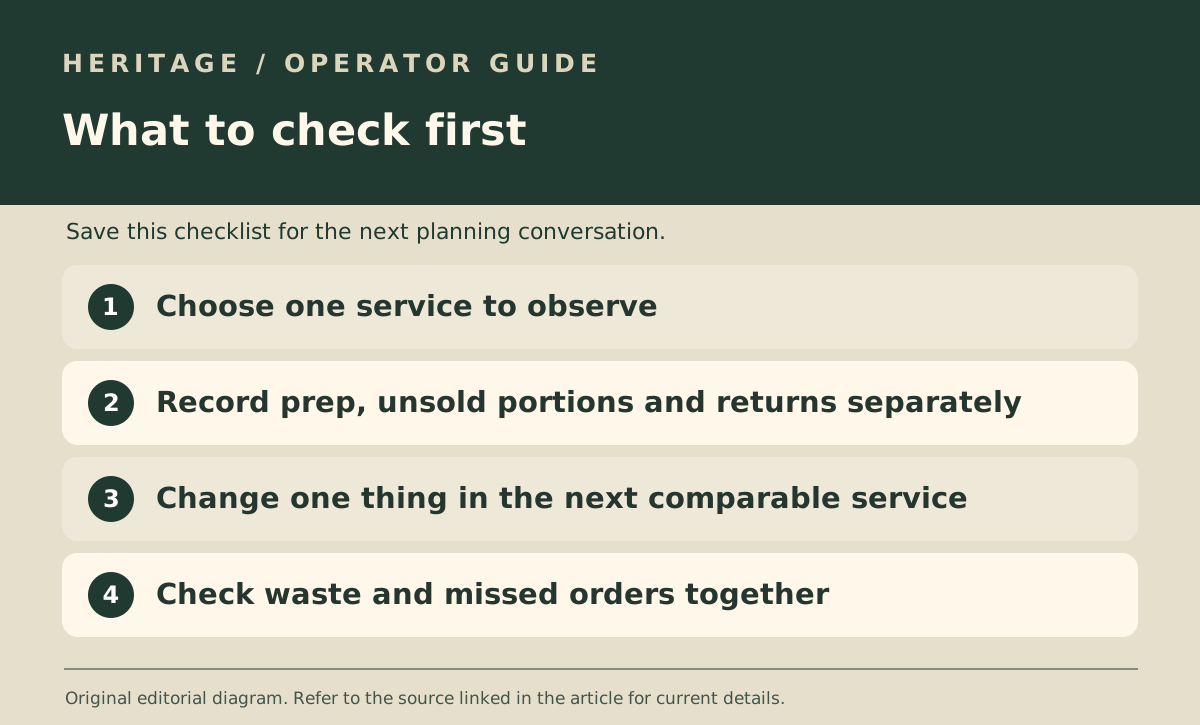
Keep three tallies rather than one total
Start with the NEA guidebook for food retail establishments. Then pick one service and log preparation waste, unsold portions and plate returns separately. Give the person logging a place to record the dish, rough quantity and reason when staff can reasonably identify one.
Keep waste collection separate from food preparation and follow your existing hygiene process. The first pass should add as little work as possible to a busy service. A simple tick sheet can be more useful than a spreadsheet that nobody opens until the end of the week.
Take one number back to the menu
Suppose the hypothetical lunch service ends with eight unsold portions of soup, but very little comes back from tables. A sensible first test is a smaller second batch, not a smaller bowl. If the same side returns untouched from several tables, test whether customers actually want it before cutting it from every order.
Write down one change before the next comparable service. Keep an eye on orders that could not be fulfilled as well. An empty waste bin does not tell the whole story if the kitchen also ran out before the lunch rush ended.
Compare like with like before making it permanent
Start with similar days and service windows. Keep a note of outliers such as a private event or a lunch crowd that was much larger than usual. Avoid using one unusually quiet service as a template for the rest of the month.
Ask who can make the next change without adding another approval loop. If it is a batch-size test, the kitchen lead should know which batch changes. If it is a menu prompt, the floor team should know how to present it.