Found a Snack to Import? Work Backwards From the First Shipment
A supplier offers a mixed carton of snacks that would look good on the counter. The quote gives a unit price, but not the information needed to get the carton here. Before placing the order, find out who will import it and what the shipment actually contains.
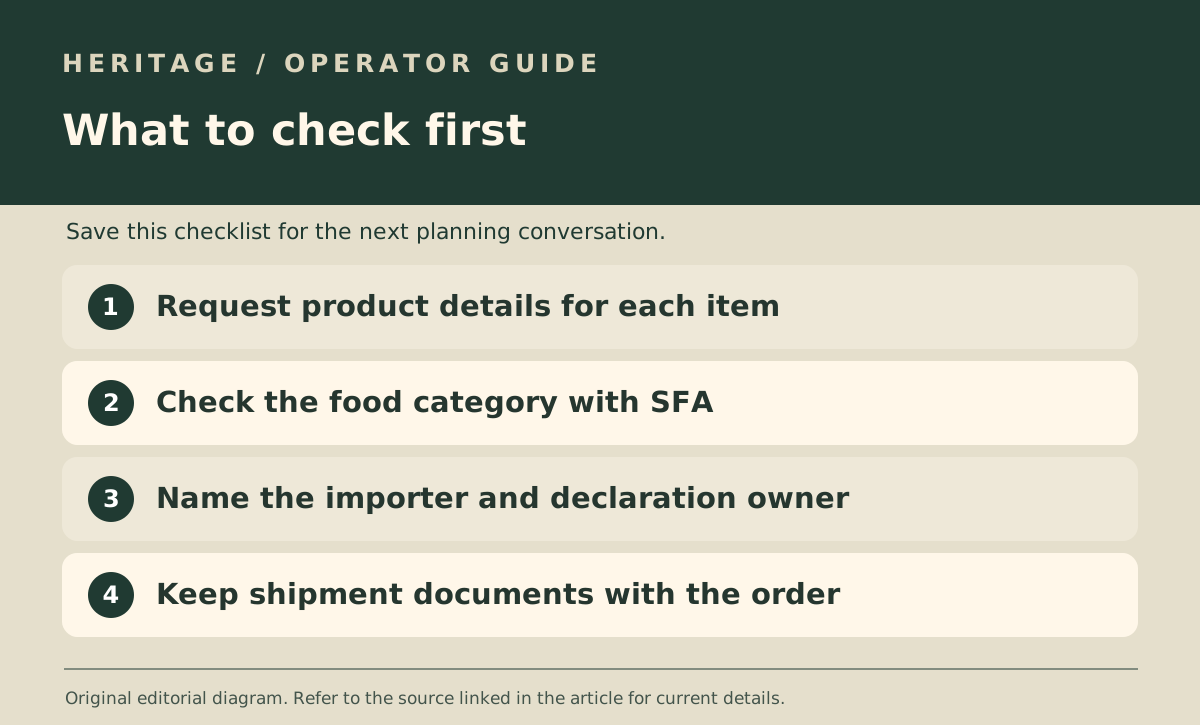
Start with each product, not the carton name
Ask for each item’s manufacturer, country of origin, ingredient information and packaging details. A mixed box is a useful example: two items sold as snacks may not fall into the same import category. Check SFA’s commercial-import guidance against the products you actually intend to sell.
Do not assume that small orders or courier delivery remove the need to check. SFA explicitly includes products received by parcel post for commercial sale in its guidance.
Give each approval a named owner
SFA describes licensing or registration for commercial food imports, with details depending on the food category. Singapore Customs separately describes the UEN, Customs Account and permit application through TradeNet. Ask the supplier or logistics company who will act as importer and who will make the declaration.
If a declaring agent is involved, confirm which entity it is acting for. A freight quote and a completed import setup are two different things. Write down which party must obtain any product information before the order is sent.
Keep the sample separate from the decision
Before you make a larger commitment, look at the actual packaging and match it to the documents. If any information is missing, resolve it with the supplier and use the regulator’s instructions for your exact category.
A useful first-shipment folder contains the signed-off product list, supplier contact, relevant import documents and a note on who receives the goods. Keep it with the order rather than in someone’s chat history.