SCENE SHANG Had Interest Overseas. It Still Needed Makers Who Could Fill the Orders
A pop-up can show that people want a chair. It cannot show that the company can deliver the next hundred chairs consistently. SCENE SHANG co-founder Jessica Wong described overseas showcases that encouraged the furniture label, but also small production runs that created bottlenecks.
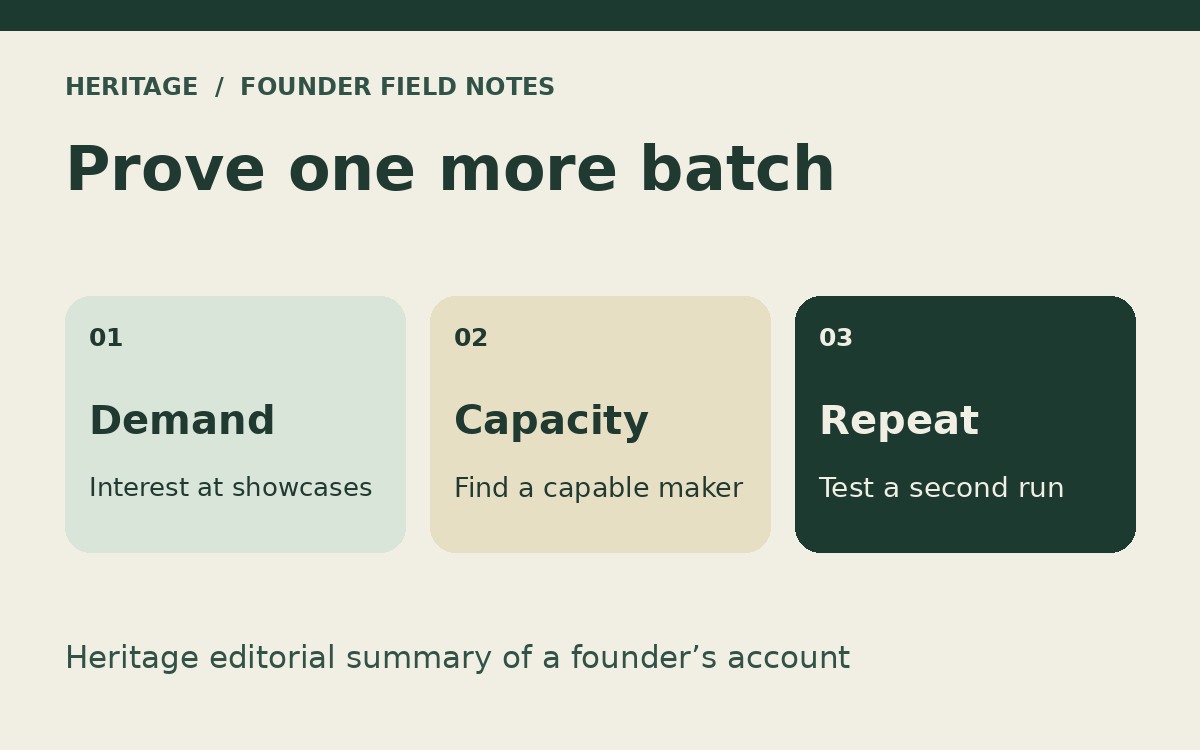
The team had signals, not a repeatable supply route
In a first-person DesignSingapore Council account, Wong describes early showcases in London, Tokyo, Sydney and Xiamen. She says the business saw potential but lacked resources and knowledge to develop those markets actively. The early pieces had been produced in small runs, including at a workshop outside Shanghai.
The design brief followed the maker’s skills
Through a DesignSingapore Council programme, mentor Nathan Yong encouraged the business to seek regional makers and examine whether they could meet higher demand. The team visited East Java workshops and found a partner with expertise in natural rattan and recyclable synthetic fibres. Wong describes developing new pieces around the available techniques, rather than merely sending an old design to a larger factory.
Her account reports the expanded range and work on operations. It does not establish later export revenue or how individual stockists performed.
Ask for repeatability, not just an excellent sample
Before using a showcase as evidence to expand, check what one follow-on order would require: a production slot, tolerances the maker can hold and packing that protects the product in transit. Ask how the second batch will match the first. A showroom sample tests design appeal. A repeat run tests the ability to supply it.