Kim Choo Sold Dumplings Under a Banyan Tree. The Family Now Explains How They’re Made
There is a quick way to buy a Nyonya dumpling and a slower way to understand one. Lee Kim Choo began selling them along Joo Chiat Place, her family says, and later generations turned part of the business into a place to hear about the craft as well as buy the food.
A neighbourhood counter carried the trade
The family dates the business to 1945 and says Lee Kim Choo first sold dumplings under a banyan tree along Joo Chiat Place. The National Heritage Board’s gallery story identifies a 1978 photograph of her behind the counter at 60 Joo Chiat Place. They describe different moments of the same business.
A second offer made the context visible
The business’s visitor-centre page describes a workshop explaining kueh and piah. The National Heritage Board lists the shop as part of its Katong–Joo Chiat street-corner galleries. A shopfront that can teach a skill has a different offer from a counter serving the queue.
These sources describe the formats; they do not show that visits outperform food sales or that any workshop runs every day.
Teach one step without slowing the queue
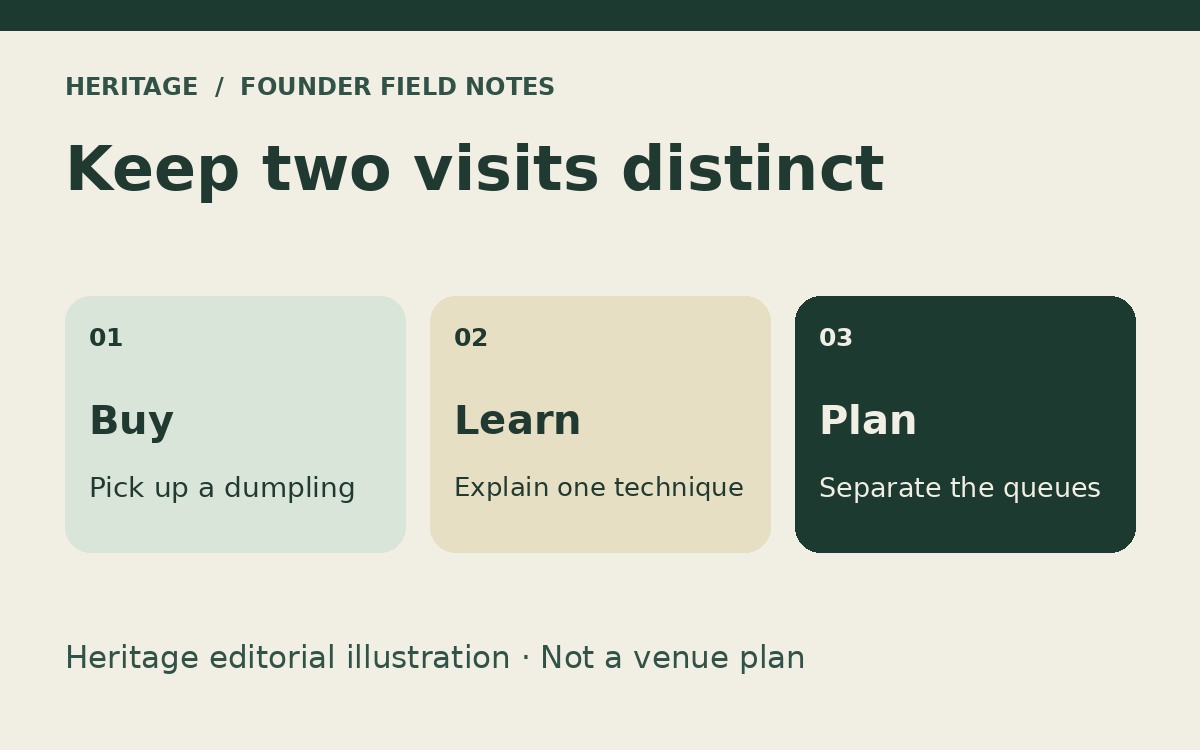
For an owner with a signature product, pick a single skill visitors can watch or try in a dedicated session. Decide which prep station and staff hours the activity needs before advertising it. A cash-and-carry queue and a learning group should not compete for the same moment on the roster.
The heritage benefit is making the story specific enough to pass on, without requiring every lunch customer to spend an hour discovering it.