Fong Yit’s Kaya Recipe Stayed. The 4am Egg-Cracking Shift Changed
Goh Teng Huat remembers starting at 4am. Making a batch of kaya meant breaking roughly 5,000 eggs by hand, long before anyone cooked the mixture. Fong Yit eventually changed that step without, according to the family, changing the taste it sold.
One batch made the scale problem visible
Fong Yit traces the business to 1945. In an interview published by CapitaLand, Goh described preparing about 300kg of kaya at a time. The egg preparation lasted until around 7am in his example, and cooking followed. These figures are his account of the old routine, not an independent production audit.
The second generation changed prep, not the purpose
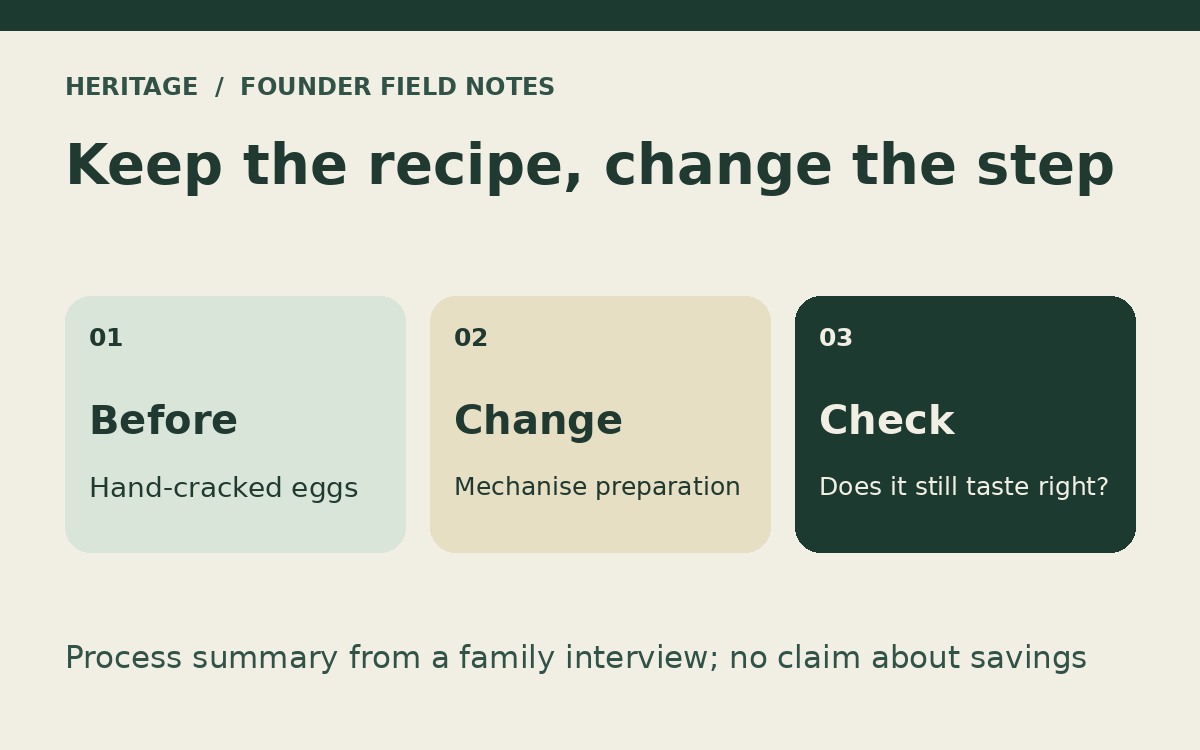
Goh says he brought in a machine that could break up to 5,000 eggs an hour. His father grew more open to the idea as the business expanded. The family still describes its core recipe as one passed down across three generations. Neither source supplies the machine purchase price, cost per jar or payback period.
Decide what must remain unchanged
A producer weighing automation can start with one repetitive task that is holding up the day and define what the finished item must still be like. Run a small comparison, check the finished product blind and measure the staff time actually freed. If the new method moves work to cleaning or checking, count that too.
An improvement is not just faster on its own. It needs to leave the next person with the same reliable input.