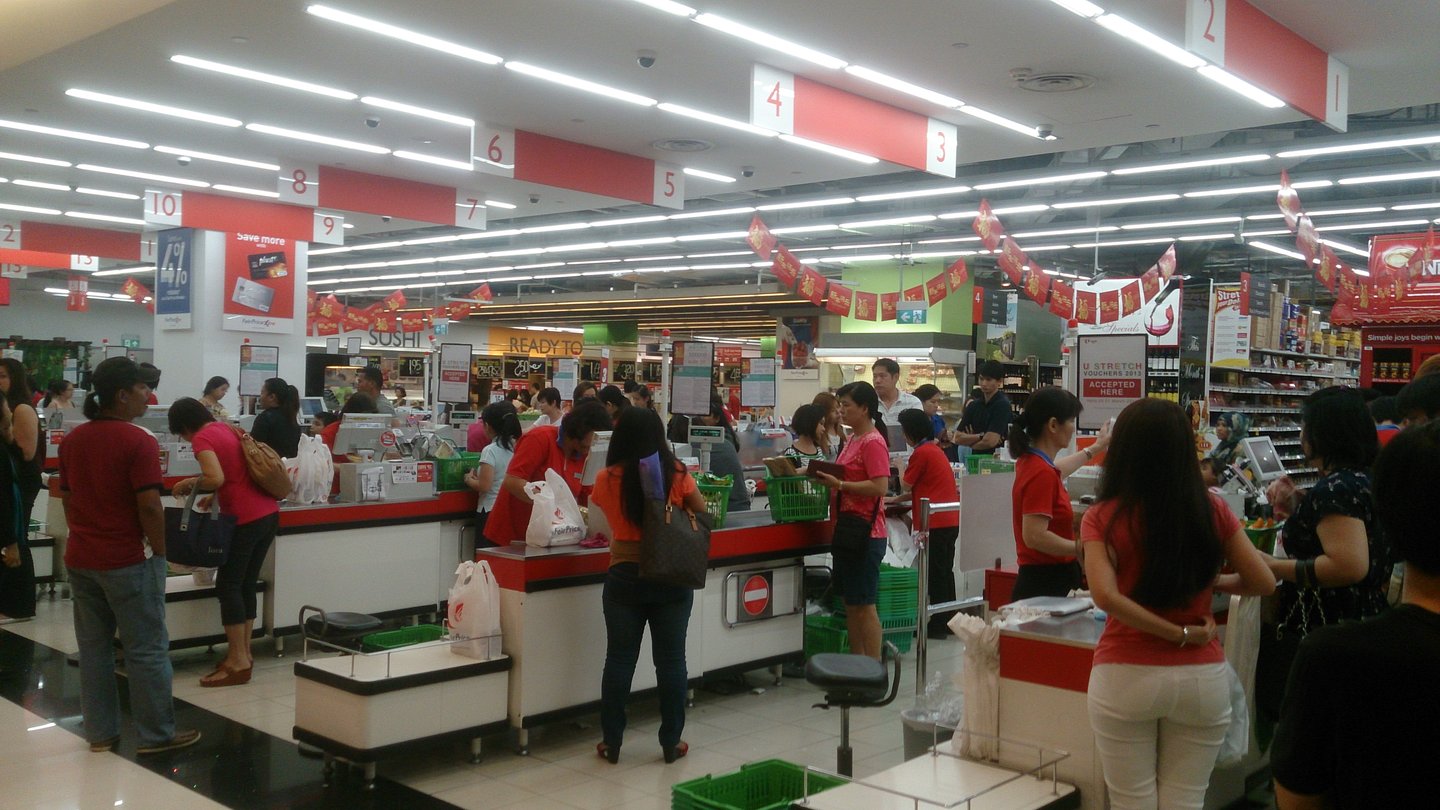
FairPrice Started in Toa Payoh. Its Toughest Work Was Keeping Basics on the Shelf.
A low price is of little use if the shelf is empty. NTUC Welcome opened in Toa Payoh in 1973 to give shoppers another place to buy essentials. Building an alternative that kept working when supplies tightened took more than putting prices on a sign.

Give shoppers somewhere else to buy staples
NTUC dates the first Welcome cooperative supermarket to July 1973. It opened in a Toa Payoh neighbourhood as Singapore was already facing high inflation; the global oil crisis followed later that year.
The order matters. The co-op wasn’t improvised after the oil shock. It was a response to worries about the cost of essentials, and the shock made the consequences of those worries much more visible.
A bigger network changed what the stores could do
In 1983 Welcome merged with the Singapore Employees Co-operative to form NTUC FairPrice, according to NTUC’s published account. Distributing goods across a larger network gave the merged operation more scale.
Scale by itself is not a guarantee of low prices. The useful part is to ask what it can change: ordering quantities, where stock is kept and whether the business can move it to wherever demand turns up.
A later disruption tested more than the price tags
NTUC points to the fresh-food distribution centre during SARS in 2003, when the Pasir Panjang wholesale market closed because of infection. It says its stock and continuing deliveries helped maintain vegetable supply.
It is an account from the organisation itself, not proof that one warehouse explains prices across Singapore. It shows what the retailer considered worth putting in place before it needed to respond.
Choose the few essentials you can never afford to run out of
A small shop can’t build a distribution centre. It can name the staples customers expect every time, track which ones are hard to replenish, and make a backup plan for those first.
Start by asking what a buyer can reasonably substitute. Give the hardest-to-replace goods the most attention, instead of giving every item on the shelf the same plan.