Fort Canning beyond the tree tunnel
Fort Canning makes more sense as a history walk than a queue for one photograph. Its galleries and gardens cover different periods, from the 14th-century settlement to the spice trade and colonial fort.
Use the free Heritage Gallery as your anchor, then choose the garden stops that interest you. The sequence below is a self-guided suggestion, not a timed official tour or a step-free route.
Start with the Heritage Gallery
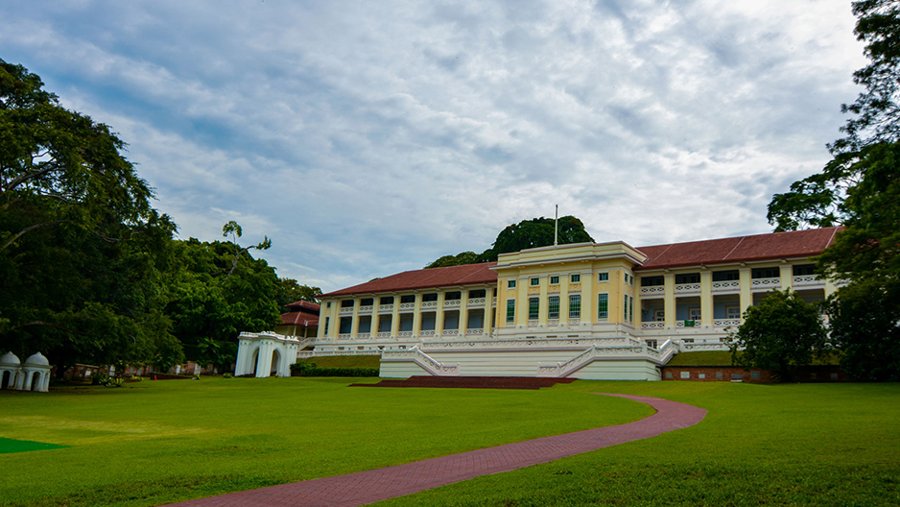
Begin in the south wing of Fort Canning Centre. Five zones across two levels introduce the hill’s history, with archaeological finds and a short film. Starting indoors gives the later outdoor stops context instead of leaving you to piece the story together from isolated signs.
The monthly maintenance closure falls on the last Monday, not every Monday. On that day, make the gardens and Spice Gallery the focus instead. The park itself is open 24 hours, but that does not extend the galleries’ opening times.
Choose three outdoor stops
Follow the signed park paths and use the official map for connections. This selection groups distinct subjects rather than attempting all nine historical gardens.
Artisan’s Garden
Lower eastern slope
The archaeological site explains the craftsmen who lived and worked on the hill in the 14th century. Look for the interpretation of excavations and workshop activity, rather than expecting an intact ancient palace.
Official details →Sang Nila Utama Garden
Along the eastern side of the hill
Javanese-style split gates, a symmetrical layout and a reflective pool evoke historical palace gardens. This is a modern recreation informed by historical accounts, not surviving 14th-century garden architecture.
Official details →Fort Gate
Near the former fort wall and old gunpowder magazine
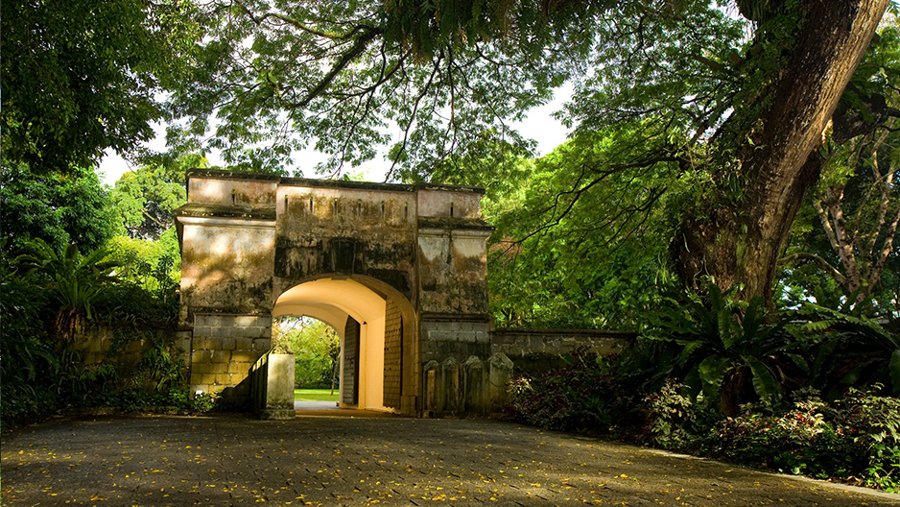
Compare the garden recreations with this remnant of the colonial hilltop fort. The map marks the gate, wall and magazine separately, so you can identify what you are looking at rather than treating every old structure as one building.
Official details →Finish with the Spice Garden and Gallery
The Spice Garden includes herbs, spice trees and a changing Spice of the Month display. Its gallery explains Singapore’s early plantations and spice trade, with replicas of a provision shop and kopitiam in the underpass section.
This is a useful final stop if you want the walk to connect history with familiar cooking ingredients. Follow the mapped paths back towards the Canning Rise side rather than cutting across planted areas.
Add Battlebox only if you have a booking
The separate Battlebox museum at 2 Cox Terrace offers a free Basic Experience with limited hourly slots. For 2026 visits, reserve through its official website. The paid Enhanced Experience adds an audio tour and projection rooms; standard adults pay S$20, or S$15 for Singapore citizens and permanent residents.
It opens Tuesday–Sunday, 10am–6pm, with last entry at 5pm. Allow about an hour. The original bunker is not wheelchair accessible, even though NParks lists an accessible approach to parts of the surrounding park.
Plan the hill, not just the station
NParks lists Fort Canning, Dhoby Ghaut and Clarke Quay as nearby MRT stations. They approach different sides of the hill. For wheelchair access, NParks specifically directs visitors to the Cox Terrace roundabout drop-off point; do not assume a staircase route from the MRT is suitable.
Save the NParks-linked park map and check signs on arrival. For food afterwards, see our Clarke Quay food guide.