Sensory-Friendly Outings: Resources to Check First
Choose an outing by the sensory conditions and support that matter to you, rather than a general “sensory-friendly” label. Official preparation resources can help, but they do not promise a quiet visit.
Name the requirement before choosing the venue
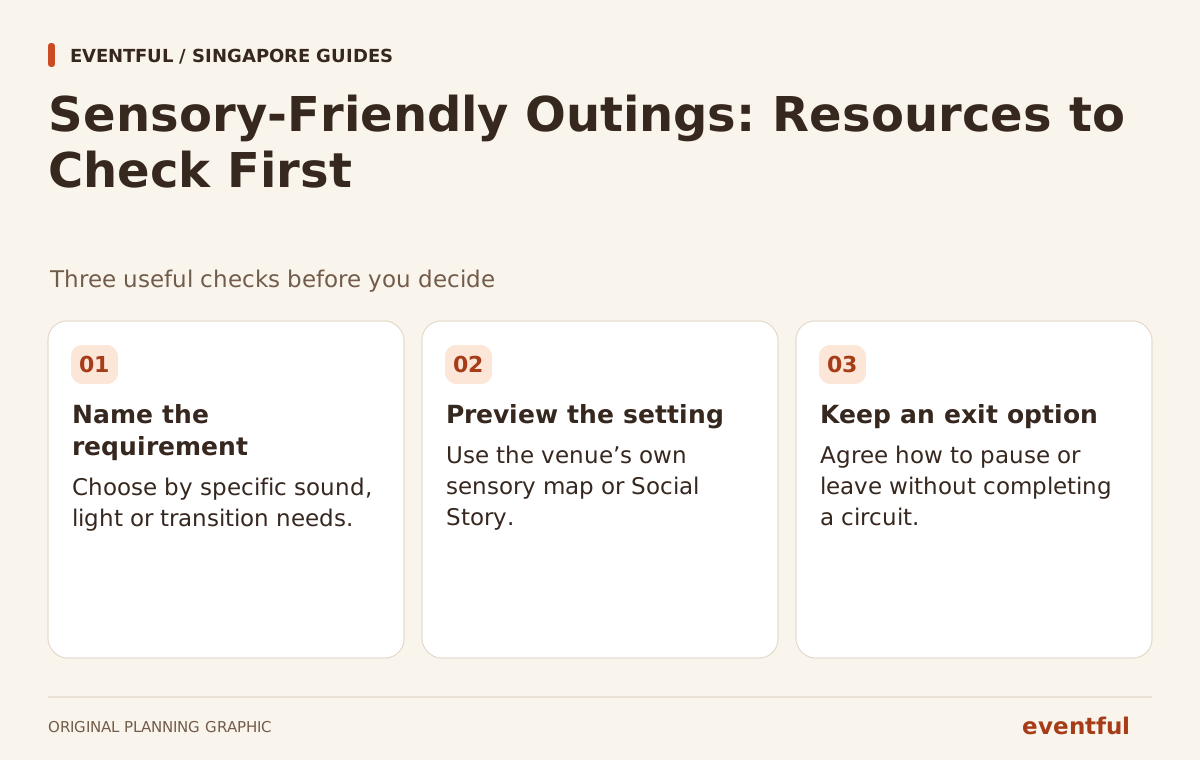
Start with the situations that need planning: unexpected sound, low light, touch, crowds, unfamiliar routes or difficulty leaving an activity. The useful question is not whether a place is universally suitable, but whether its current environment and support meet your needs.
If you are comparing science venues, our science museum guide helps with the subject matter. For sensory planning, make a separate shortlist based on access information. An attraction can be interesting and still be the wrong fit for a particular day.
Ask the person visiting what helps where possible. A companion’s preferred plan is not automatically the same as the visitor’s own priorities.
Use maps and Social Stories for specific decisions
Mandai publishes sensory maps identifying features such as free-ranging-animal enclosures, quiet zones and stronger sensory inputs. Use the map for the exact park you are considering, then decide which areas to include, avoid or approach with a clear exit option.
Science Centre’s accessibility information includes Social Stories for Science Centre and KidsSTOP, together with information about light and sound. Punggol Regional Library also publishes a Social Story. These resources can support a preview of the visit and help explain the order of activities.
A preparation document is not a live report of crowd levels or an assurance that equipment, lighting or programmes will never change. Check current notices and contact the venue when a particular condition is decisive.
Ask about the support, not just the label
Science Centre describes sensory bags available at its Visitor Services Centre and a contact for KidsSTOP group Quiet Sessions. A group arrangement needs to be discussed as a specific booking; it should not be assumed to apply to ordinary admission.
NLB’s Punggol fact sheet lists Calm Pods among its accessibility features. Ask about current access and use arrangements if a Calm Pod is central to your plan. Do not promise someone a private recovery space without checking how it is made available.
Keep the enquiry concrete: which environment is difficult, what adjustment would help, whether you need to leave and re-enter, and whether a support item can be brought in. You do not need to turn an ordinary planning question into a detailed medical disclosure if functional requirements will answer it.
Make an exit plan as carefully as an entry plan
Before leaving home, agree on an easy way to communicate “pause” or “leave”. Choose a short initial visit with optional extensions rather than a fixed circuit that becomes hard to abandon. Where tickets are involved, read the re-entry and change terms before assuming you can return later.
Pack the familiar support items you normally use and check any venue restrictions that apply. Identify a place to regroup and the route back to transport. Do not treat a quiet-zone marker as a guarantee that the surrounding journey will also be low stimulation.
After the outing, note what worked for the person who attended: a particular route, a useful preview or a shorter duration. That is more informative for the next visit than a generic ranking of venues. Find other possibilities in our Singapore guides, then repeat the same specific access checks.
Good to know
· Ask about the exact sensory condition that matters to you.
· Plan an uncomplicated exit and treat staying longer as optional.
FAQs
Does a sensory map mean a venue will be quiet?
No. It helps identify particular environmental features, but does not guarantee noise levels, crowd conditions or a suitable experience for everyone.