Baking Classes in Singapore: Trial or One-Off Workshop?
A baking trial, a one-off workshop and a multi-session course are different purchases. Choose the format that matches your goal: trying a studio, making one bake for fun, or building skills over several lessons.
Start with the format, not the finished-cake photo
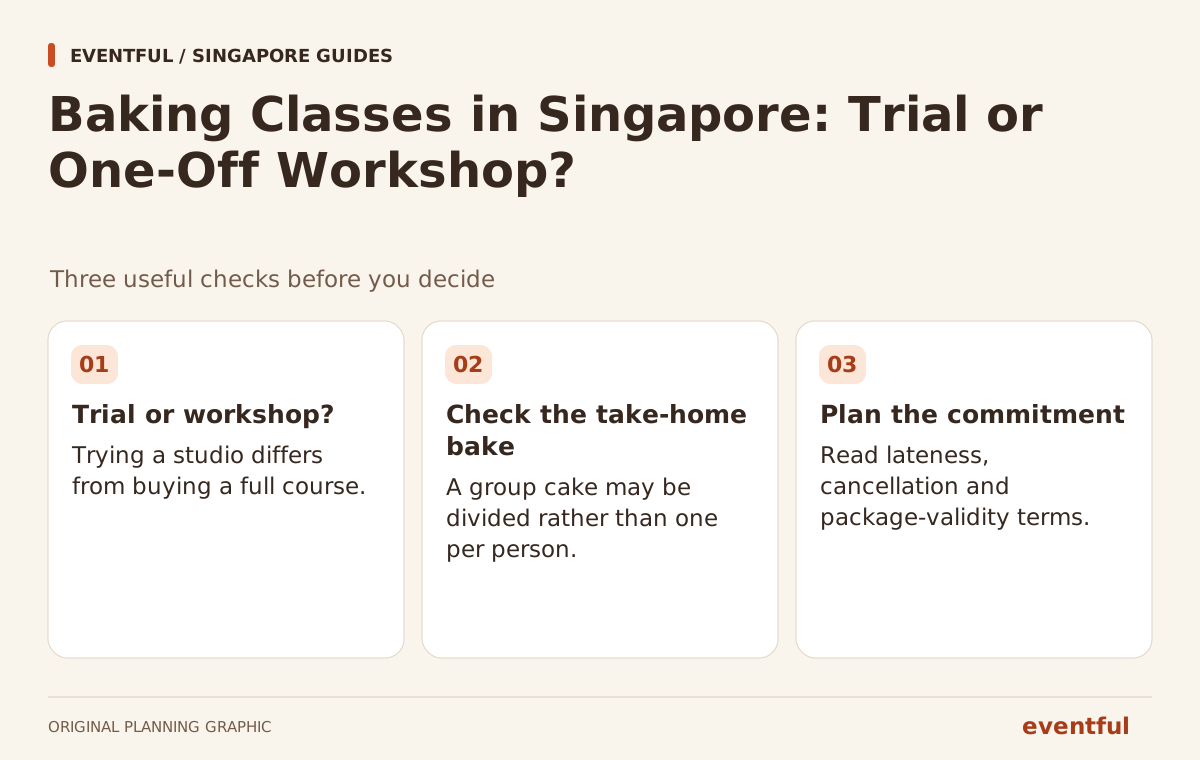
A trial lesson lets you experience a studio’s teaching approach before deciding whether to continue. A one-off workshop should make sense as a complete activity on its own. A course needs a larger commitment of time and money, so check the schedule and what happens when you miss a session.
If you want a date activity, agree whether both people actually want to bake or mainly want the finished cake. Our first-date guide has alternatives that need less concentration. Baking is a good choice when following instructions together sounds enjoyable, not when one person expects a café visit.
What ABC Cooking Studio’s trial involves
ABC Cooking Studio lists a two-hour trial lesson. Its current page requires an apron and provides packaging for cake or bread lessons. Cooking-trial food is eaten in the studio, so do not assume every type of lesson ends with a takeaway box. Read the selected menu and participant conditions before booking.
The trial page also has a strict lateness rule: arriving more than five minutes late forfeits participation without a refund or reschedule. Treat that as a reason to build in travel time, not as a target arrival margin. Check the current terms because a trial’s conditions may differ from a regular course or another operator’s workshop.
What to ask about a one-off class
Palate Sensations’ FAQ describes hands-on classes with small-group work. For cakes, participants may take home a share of what the group makes rather than one whole cake each. That distinction matters if you are picturing two people leaving with two complete celebration cakes.
Ask which parts are made from scratch, how many people share a station and whether you practise decorating or only watch it. Check whether recipes are provided and whether the equipment used is realistic for your home kitchen. A workshop can be worthwhile as an experience even if you will not repeat it, but know which kind of value you are buying.
Check the full cost and the trip home
Add materials, required equipment and any packaging charge to the class fee. Confirm age and height requirements where relevant, and ask about allergy handling before paying. Do not infer an allergen-free environment from a recipe that happens not to list your allergen.
Plan what happens after the lesson. A chilled bake needs suitable transport and storage, so a long shopping afternoon may not fit. Ask the instructor for the exact product’s care instructions. For a longer course, read package validity, booking access, cancellation and transfer conditions before signing up. There is no need to buy several lessons on the day just because the trial was enjoyable; compare the commitment with your actual calendar.
Good to know
· Check the take-home quantity per person, particularly when booking as a pair.
· Bring the required apron and arrive with enough time to find the studio inside the building.
FAQs
Will each participant take home a whole cake?
Not necessarily. Some classes divide a group bake, so confirm the quantity for your session.
Is a trial lesson the same as buying a course?
No. Read the trial’s own conditions and evaluate any longer package separately.