Kampong Gelam: connect the heritage streets with contemporary design
Kampong Gelam is not just a mural backdrop. A useful walk connects the royal and religious landmarks with the trading streets and the newer design scene, so each stop explains something different.
Treat the mosque or museum as the main visit, then add a small street loop. Trying to cover every shop and artwork can turn a compact neighbourhood into an unnecessarily rushed day.
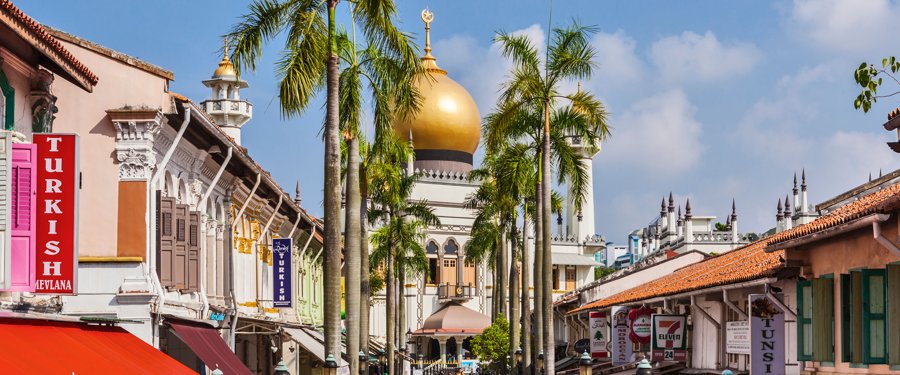
Pick the timed stop first
Sultan Mosque lists walk-in visiting windows of 10am–noon and 2pm–4pm, Saturday to Thursday; Friday is closed to walk-in visitors. Use these windows to decide your start, not the opening time of a café. The mosque lists Bugis and Jalan Besar MRT as roughly ten minutes away on foot.
For a museum-led outing, check the Malay Heritage Centre’s current visitor information before setting off. NHB’s April 2026 announcement confirms its reopening on 25 April, with refreshed permanent galleries. Older pages describing the multi-year closure are no longer a reliable basis for planning; this guide does not assume an old ticket price or opening timetable.
Four linked stops with different stories
Use the NHB heritage trail and map on Google Arts & Culture to place the streets. The sequence below is a suggested selection, not a claim to reproduce every official trail stop.
Malay Heritage Centre and Sultan Gate
Sultan Gate
The former royal residence anchors the heritage story. The refreshed centre’s narrative considers Singapore Malay identities and connections with the wider region. If you are not entering, keep this as an exterior orientation stop and do not wander into restricted areas.
Official details →Sultan Mosque and Bussorah Street
3 Muscat Street; Bussorah Street approach
NHB connects the stretch of Bussorah near the mosque with the former pilgrim village. Look at the street in relation to the mosque rather than isolating the golden dome as a photo subject.
Official details →Arab Street
Arab Street
NHB’s account describes a trading district shaped by people from several regions, not only the community in the street’s name. Compare the shopfronts and merchandise, asking permission before photographing inside businesses.
Official details →Haji Lane and nearby public art
Haji Lane area
Use the National Arts Council’s art-trail map to pick a few works rather than chasing every mural from an old social post. Public art can change, so treat individual images as possibilities rather than guaranteed fixtures.
Official details →Mosque entry has specific boundaries
The mosque directs visitors to Gate 5 facing Bussorah Street. Dress appropriately, remove footwear where instructed and keep quiet. Its visitor rules restrict access to the main and second-floor prayer halls unless accompanied by an official. Photograph only within the venue’s rules; approval is required for video recording.
A walk-in visit is not the same as an arranged group tour. If you are bringing a large organised group, read the official visiting arrangements rather than arriving during a public window and expecting a guide.
Choose a longer design route only if you want one
For an art-focused return visit, the NAC Kampong Glam trail provides a separate mapped route. It covers more of the precinct than this short selection, including streets beyond the main mosque-and-shop cluster. Do not confuse its full-route duration with a museum visit added on top.
Keep a flexible indoor break for heat or rain and use nearby public facilities rather than asking worship venues to function as rest stops. Cross roads at designated crossings and leave doorways clear while looking at art. Finish with one thing you noticed about trade, architecture or community history; that is more memorable than collecting a dozen rushed photos.