Eating Out with Food Allergies in Singapore
If you have a food allergy, contact the restaurant before the meal and ask about both ingredients and preparation. This planning guide helps organise that conversation. It does not replace your clinician’s advice or guarantee that any restaurant can serve you safely.
Start with a clear request
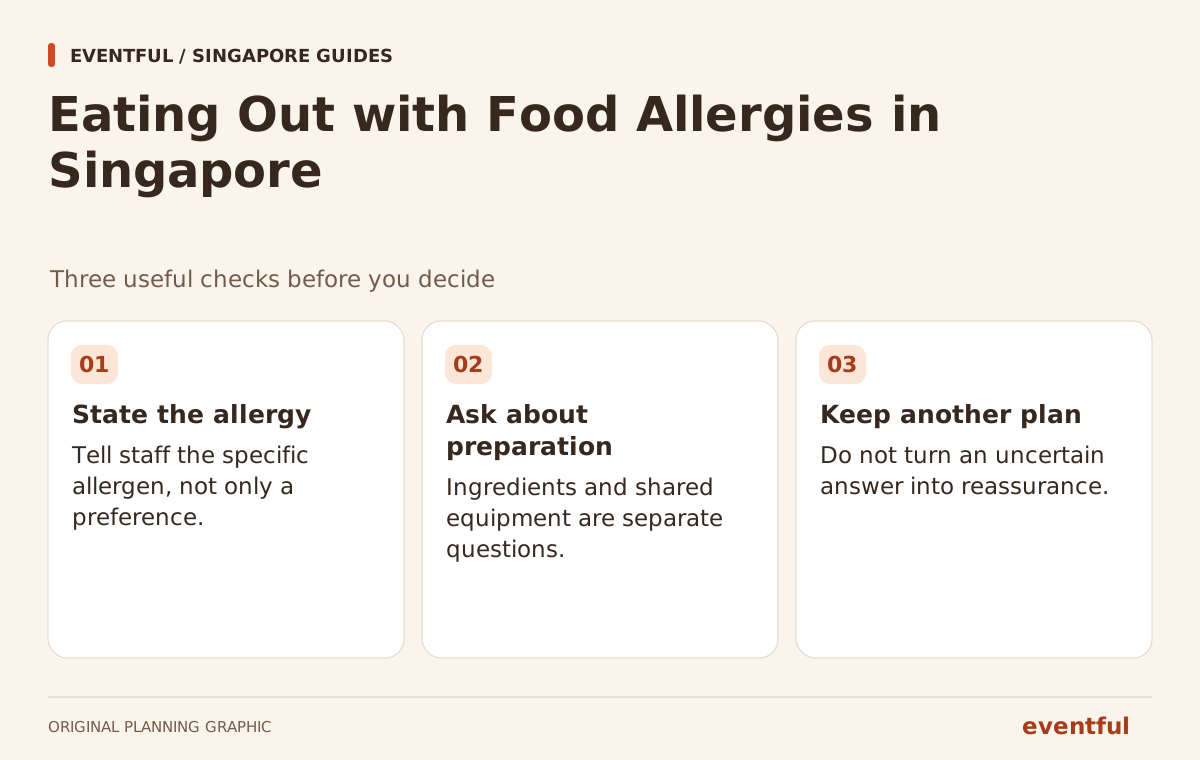
Tell the restaurant the specific allergen and that you have an allergy. “I cannot have peanuts because of an allergy” is clearer than “no nuts if possible”. Ask whether a manager or kitchen staff member can confirm the dish’s ingredients and how it will be prepared. If the answer is uncertain, do not turn uncertainty into reassurance.
When choosing a venue from our family restaurant guide, contact the exact branch. A family-friendly setting, vegetarian menu or halal certificate does not establish suitability for an allergy. Menus and preparation can differ across dishes and outlets.
Ask beyond the main ingredient
Use the dish as a starting point, then ask about sauces, stocks, garnishes, marinades and bought-in components. Ask whether ingredients can be checked from their packaging if staff do not know. A dish name is not a complete ingredient list, and removing a visible topping does not answer questions about what went into the recipe.
SFA explains that allergen cross-contact can occur during food handling and production. For restaurant planning, ask about shared utensils, equipment and preparation areas relevant to your allergen. Food Standards Australia New Zealand also advises telling waiting staff about allergies and checking whether the business can meet your requirements. A restaurant unable to answer is not a suitable basis for guessing.
Confirm again when ordering
Even after a helpful phone call, speak to staff on arrival. Explain which dish was discussed and ask them to confirm the request with the kitchen. If a special arrangement was agreed, check that it still applies to today’s menu and staffing. Keep the conversation specific and calm, with one person responsible for communicating the request.
For a shared meal, agree who is ordering what and avoid treating communal serving utensils as an afterthought. If you are hosting, ask the person with the allergy what arrangements they need rather than deciding for them. Do not pressure them to try a dish because the rest of the group is comfortable with it.
Read labels and leave room for another plan
SFA advises consumers with food allergies to check food labels and look for precautionary statements such as “may contain”. Read the current pack rather than relying on a previous purchase. The same caution applies to takeaway desserts or gifts that arrive after the restaurant meal.
Build the evening around the person, not an unchangeable booking. Keep another venue or meal option available if the kitchen cannot verify the necessary details. Follow the emergency plan and medication instructions given by your clinician. Allergy and intolerance are not interchangeable diagnoses, so this guide does not tell you what exposure is acceptable or whether a symptom is safe to ignore.
Good to know
· Write down the specific questions before calling so important details are not lost in a busy conversation.
· If staff provide conflicting answers, stop and clarify rather than choosing the most reassuring version.
FAQs
Does a vegan menu mean it is safe for my allergy?
No. Check the specific ingredients and handling relevant to your allergy.
Can a restaurant guarantee there is no cross-contact?
Do not assume so. Ask directly about its procedures and follow your clinician’s advice when deciding whether to eat there.