Buying Your First Plant in Singapore: A Nursery Guide
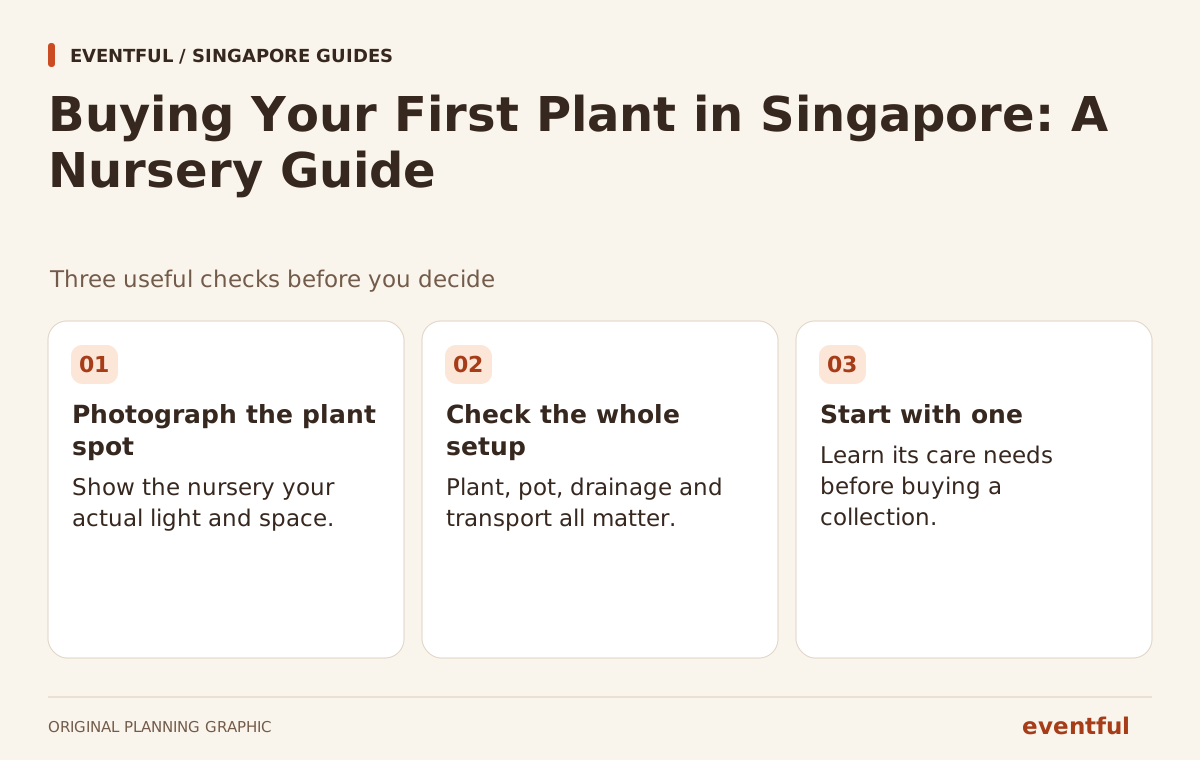
Before visiting a plant nursery, photograph the spot where the plant will live and note how much light it gets. That information is more useful than asking for a plant that is simply “easy”, because easy care still depends on the conditions at home.
Start with the space at home
Look at the intended spot at different times of day. Does it receive direct sun, bright indirect light or very little natural light? Note air-conditioning, available floor or shelf space, and whether pets or young children can reach it. Bring those details to the nursery rather than choosing only by leaf shape.
NParks’ GardeningSG resources organise beginner advice around growing conditions and plant selection. A plant-shopping outing can be a quieter alternative to another mall visit; our solo outing guide has more ideas. Keep the shopping list short enough that you can carry the purchase home safely.
Use a nursery visit to ask specific questions
Far East Flora’s locator lists its main centre at 435 Clementi Road, a Thomson outlet at 555 Thomson Road, and a Queensway outlet at 590 Queensway. Check the chosen outlet rather than assuming every location carries the same stock or offers the same experience. Its FAQ encourages matching plants to light, space and the amount of care you can provide.
Ask staff for the plant’s name, expected mature size and care instructions. Describe your actual conditions rather than saying only “indoors”. Low light does not mean no light. If you will be away often, explain that too; a realistic care plan is more valuable than buying several plants you cannot maintain.
Inspect the plant and the pot
NParks advises looking for healthy growth when selecting plants. Check the leaves, stems and potting surface rather than judging from the front view alone. Ask about anything that looks damaged or unfamiliar. You are choosing a living plant, so the specimen you receive will not be identical to a catalogue photograph.
Then ask what the price includes. Far East Flora distinguishes standard nursery pots from decorative presentation in its product information. Confirm whether a display pot is included, whether there are drainage holes and what sits underneath it. NParks’ container-gardening guidance also cautions that an excessively large pot can create problems for plants sensitive to waterlogging.
Budget for the whole setup
Add the pot, saucer, suitable growing medium and any delivery or repotting service you actually need. Avoid buying every accessory on the first trip. Start with one manageable plant and a place for it, then learn how it responds before expanding the collection.
Plan transport around the plant’s height, weight and stability. At home, follow the species-specific guidance instead of watering all plants on an identical schedule. If pets may chew the leaves, check the species with a suitable professional rather than relying on a decorative label. Keep corridors and shared access clear, and do not place pots where drainage or movement will inconvenience neighbours. A successful first purchase is one you can live with, not the largest plant that fits the budget.
Good to know
· Take a photograph of the window and plant spot, not only a mood-board picture.
· Write down the plant’s name and care instructions before leaving the nursery.
FAQs
Is an indoor plant suitable for a room without light?
Do not assume so. Discuss the actual light conditions and any suitable lighting with the nursery.
Should I buy the biggest pot available?
No. Match the pot to the plant and its drainage needs rather than choosing size alone.